Varicose veins affect millions of adults and are often misunderstood as a cosmetic issue. In reality, they are frequently a sign of chronic venous insufficiency, a medical condition that can cause pain, swelling, skin changes, and long-term complications if left untreated.
Thanks to advances in interventional radiology (IR), varicose veins can now be treated using minimally invasive, image-guided procedures—without surgery, long recovery times, or hospital stays. At Aria Vascular, these modern treatments help patients find lasting relief and return quickly to daily life.
What Are Varicose Veins?
Varicose veins are enlarged, twisted veins that most commonly appear in the legs. They develop when the valves inside the veins weaken or fail, allowing blood to flow backward and pool instead of returning efficiently to the heart.
This condition—known as venous insufficiency—causes pressure to build inside the veins, leading to visible vein changes and uncomfortable symptoms.
Common causes include:
- Family history of vein disease
- Pregnancy
- Prolonged standing or sitting
- Aging
- Obesity
Symptoms of Venous Insufficiency
Varicose veins often worsen over time. Symptoms may include:
Look out for:
- Aching, heavy, or tired legs
- Swelling in the ankles or calves
- Burning, throbbing, or cramping sensations
- Itching or skin discoloration
- Restlessness at night
- Skin thickening or ulcers in advanced cases
If these symptoms are present, evaluation by a vascular specialist is recommended.
How Interventional Radiology Treats Varicose Veins
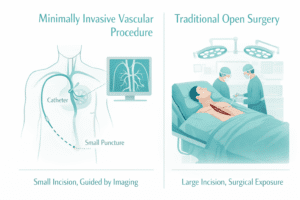
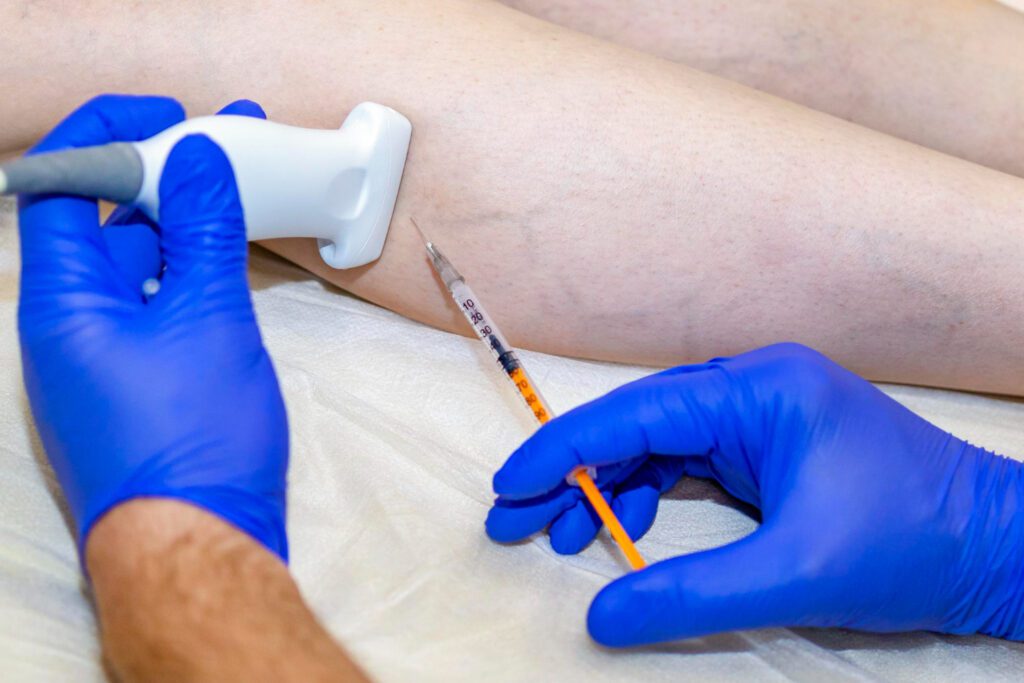
Interventional radiology uses ultrasound imaging to precisely identify abnormal veins and treat them through tiny punctures rather than surgical incisions. These procedures are performed on an outpatient basis using local anesthesia.
The goal is simple: close the faulty veins so blood naturally reroutes through healthy veins, improving circulation and relieving symptoms.
Minimally Invasive Varicose Vein Treatments
Endovenous Laser Ablation (EVLA)
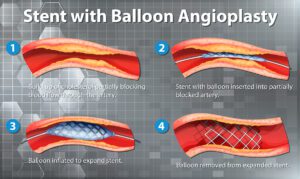
Laser energy is delivered through a thin catheter placed inside the damaged vein. The heat causes the vein to seal shut and gradually be absorbed by the body.
Benefits include:
- No surgical cuts
- Minimal discomfort
- Immediate walking after treatment
- Excellent long-term outcomes
Radiofrequency Ablation (RFA)
RFA uses controlled heat generated by radiofrequency energy to close the diseased vein. This method is known for its comfort and consistency.
Why RFA is commonly chosen:
- Less post-procedure discomfort
- High success rates
- Short recovery time
Ultrasound-Guided Foam Sclerotherapy
Foam medication is injected directly into smaller or residual veins using ultrasound guidance. This treatment is often used alongside ablation to achieve optimal results.
Benefits of Interventional Radiology for Varicose Veins
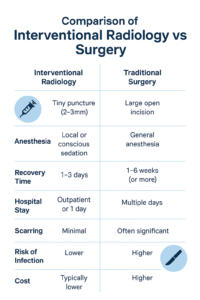
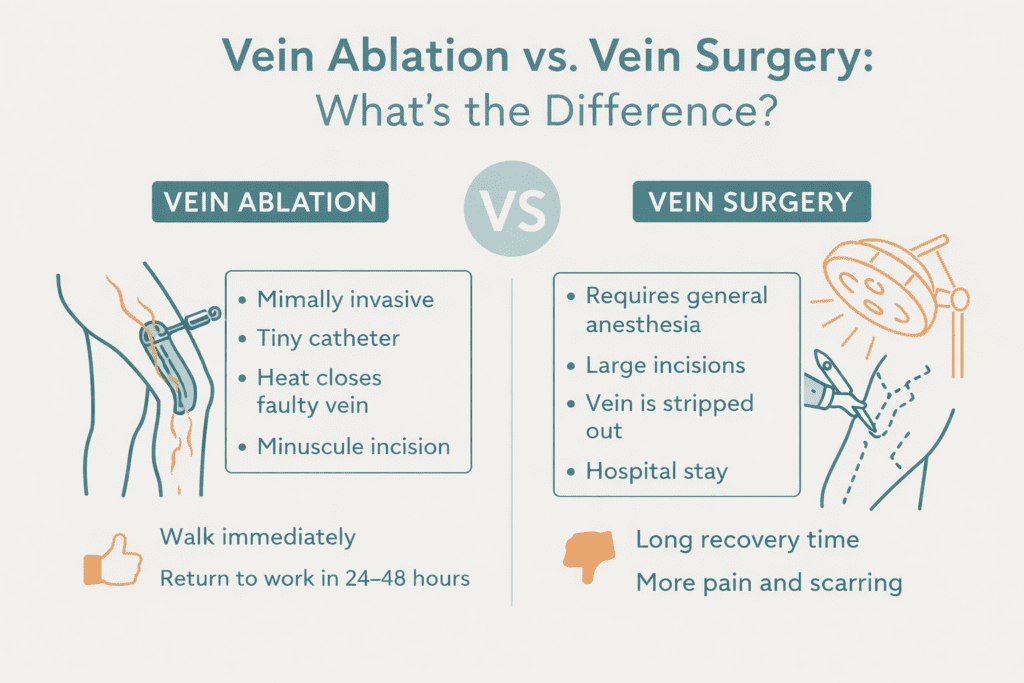
Compared to traditional vein surgery, IR offers clear advantages:
- No general anesthesia
- No stitches or surgical scars
- Same-day outpatient treatment
- Immediate mobility after the procedure
- Faster recovery—often within days
- Long-term symptom relief
- Lower risk of complications
Interventional Radiology vs. Traditional Surgery for PAD
In the past, varicose veins were treated with vein stripping, a surgical procedure requiring incisions, anesthesia, and extended recovery.
Today, minimally invasive IR procedures:
- Replace surgery in most cases
- Offer better patient comfort
- Allow quicker return to work
- Provide equal or superior outcomes
- Can be repeated if needed
For most patients, surgery is no longer necessary.
For most patients, surgery is no longer necessary.
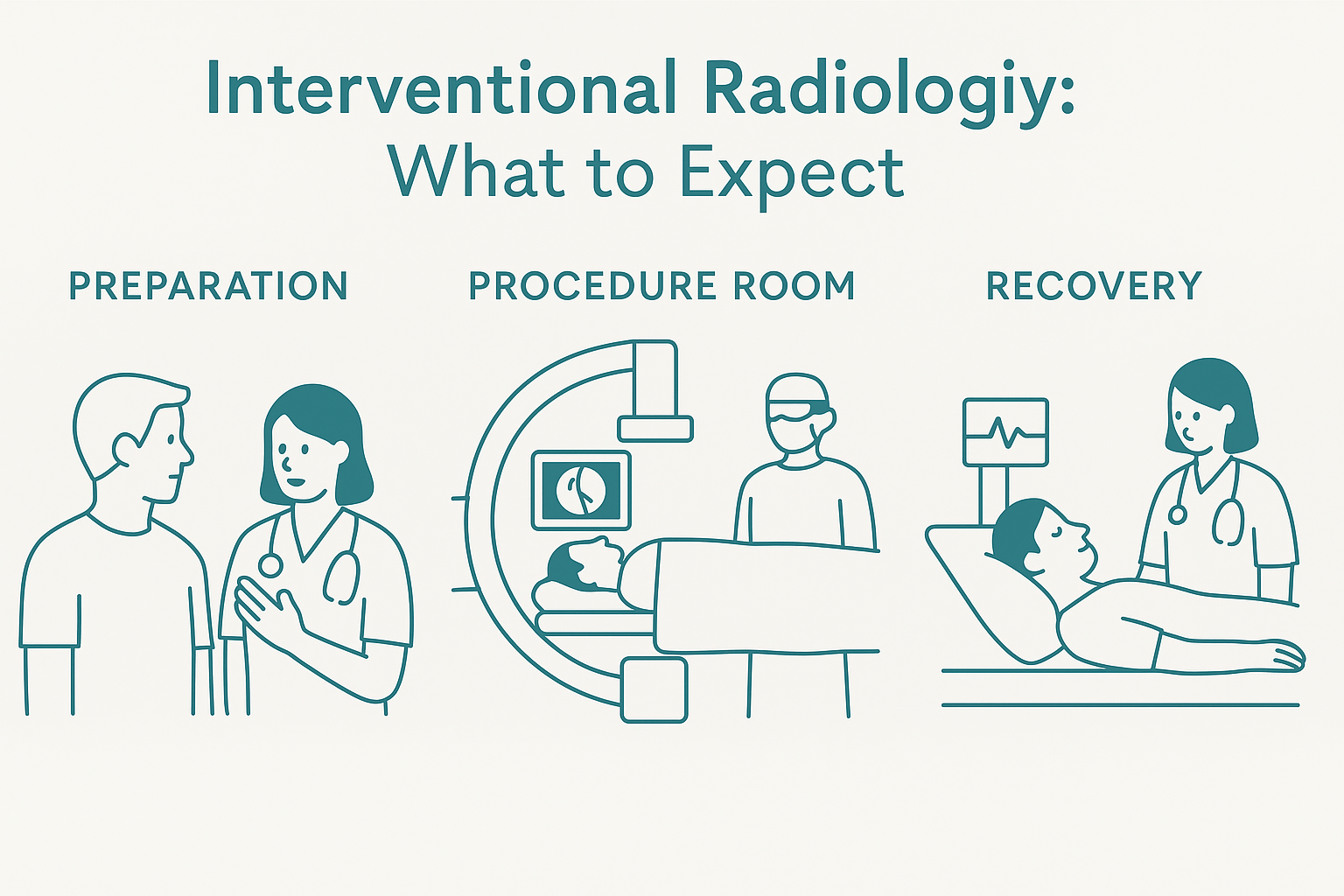
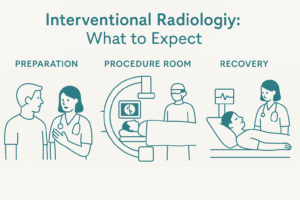
Before Treatment
- Comprehensive ultrasound vein mapping
- Review of symptoms and medical history
- Trial of compression therapy if required by insurance
During Treatment
- Local anesthesia
- Ultrasound-guided vein closure
- Procedure time typically under one hour
After Treatment
- Walking encouraged immediately
- Compression stockings worn temporarily
- Mild soreness or bruising resolves quickly
- Follow-up ultrasound to confirm vein closure
Most patients resume normal activities within 24–48 hours.
For most patients, surgery is no longer necessary.
You may be a candidate if you have:
- Symptomatic varicose veins
- Leg swelling or heaviness
- Skin changes related to venous disease
- Incomplete relief from compression stockings
- A preference for non-surgical treatment
A vascular evaluation will determine the most effective approach.
Why Choose Aria Vascular for Varicose Vein Treatment
Aria Vascular is the only comprehensive, multidisciplinary vascular center in San Joaquin County. Our team includes board-certified interventional radiologists and vascular surgeons who specialize in advanced vein care.
Patients choose Aria Vascular for:
- State-of-the-art ultrasound-guided treatments
- Personalized care plans
- Minimally invasive expertise
- Local care in Stockton serving Lodi, Manteca, Modesto, and surrounding communities
You don’t need to travel far for world-class vascular care.

Schedule Your Vein Evaluation
Leg discomfort and varicose veins don’t have to be part of daily life. Modern, minimally invasive treatment can restore comfort and confidence.
🩺 Discover how interventional radiology can help.
Frequently Asked Questions about PAD
Can varicose veins be treated without surgery?
Yes. Most varicose veins are treated using minimally invasive interventional radiology techniques.
Is vein ablation painful?
Discomfort is minimal and usually limited to mild soreness for a short period.
How long does recovery take?
Most patients return to normal activities within one to two days.
Do varicose veins come back after treatment?
Treated veins do not return, but new veins can develop over time. Ongoing care reduces recurrence.
Is varicose vein treatment covered by insurance?
When symptoms are present and conservative therapy has been tried, treatment is often covered.