A Complete Patient Guide to Chronic Venous Insufficiency and Venous Reflux
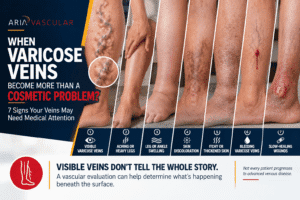
Leg swelling after a long day. An aching or heavy feeling in the calves. Varicose veins that seem to be getting larger. Brown or irritated skin around the ankles.
These symptoms can be easy to dismiss individually. But when they persist or occur together, they may point to a circulation problem known as chronic venous insufficiency, or CVI.
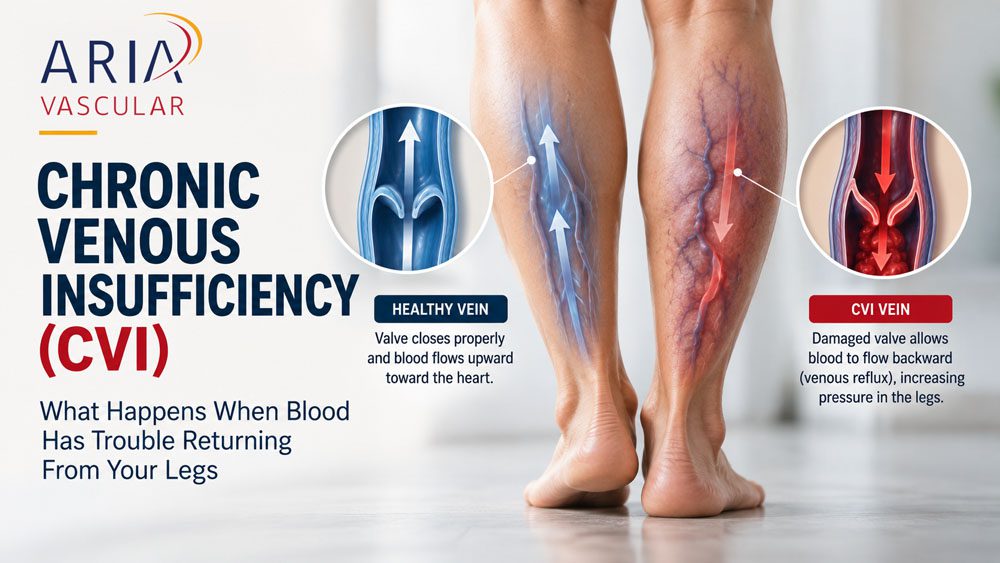
CVI develops when veins—most commonly in the legs—have difficulty moving blood efficiently back toward the heart. Often, the problem involves valves inside the veins that no longer close properly. Blood can then move backward and pool in the legs, increasing pressure within the venous system.
The condition can range from relatively mild symptoms to more significant swelling, skin changes, and, in some patients, venous ulcers.
The good news is that chronic venous insufficiency can be evaluated and managed. Treatment may range from lifestyle changes and compression to minimally invasive procedures that address abnormal veins.
This guide explains what CVI is, why it happens, the symptoms to watch for, how it is diagnosed, and today's treatment options.
Key Takeaways
- Chronic venous insufficiency (CVI) occurs when veins have difficulty returning blood efficiently from the legs toward the heart.
- Damaged or malfunctioning vein valves can allow blood to move backward, a problem known as venous reflux.
- Common symptoms include aching, heaviness, swelling, itching, cramping, varicose veins, and skin changes.
- Previous deep vein thrombosis (DVT) can damage veins and contribute to CVI.
- More advanced disease may cause stasis dermatitis, thickened or hardened skin, and venous ulcers.
- Duplex ultrasound can evaluate blood flow, vein structure, reflux, and possible blood clots.
- Treatment can include exercise, leg elevation, compression, skin and wound care, and minimally invasive procedures such as vein ablation or sclerotherapy.
- Not every patient experiences the same symptoms or progresses to advanced venous disease.
What Is Chronic Venous Insufficiency?
Your circulatory system has two major jobs.
Arteries carry oxygen-rich blood away from your heart.
Veins return blood toward your heart.
Returning blood from your legs is particularly challenging because that blood must travel upward against gravity.
Your body has several mechanisms to make this possible.
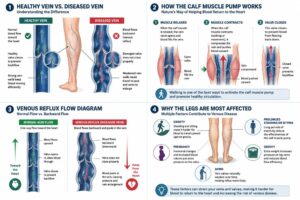
The veins contain one-way valves that help prevent blood from moving backward. At the same time, contractions of the muscles in your legs—particularly your calf muscles—help squeeze the veins and move blood upward.
When the venous system is functioning normally, these mechanisms work together to keep blood moving toward the heart.
With chronic venous insufficiency, that process becomes less efficient.
Damaged vein walls or valves can allow blood to remain in the legs instead of continuing upward. This increases pressure inside the veins and can eventually affect the surrounding tissues.
How Healthy Leg Veins Work
Understanding CVI becomes easier when you understand how normal leg circulation works.
Imagine the veins in your legs as a system of pathways carrying blood uphill.
Inside many of these veins are small valves.
Walking provides another important part of this process.
When your calf muscles contract, they compress nearby veins and help push blood upward. This mechanism is sometimes referred to as the calf muscle pump.
That's one reason movement is important for healthy venous circulation.
What Is Venous Reflux?
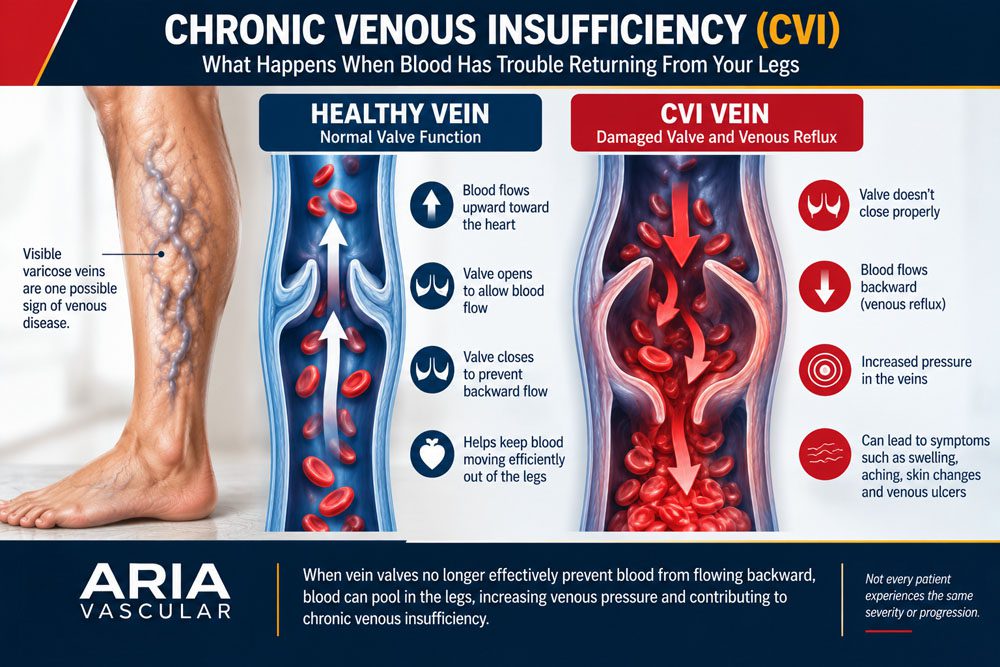
Venous reflux occurs when blood flows backward through a vein because its valves aren't functioning effectively.
Instead of continuing toward the heart, some blood falls backward and collects in the leg.
Over time, this can increase pressure within the veins.
That increased pressure can contribute to:
- Enlarged veins
- Varicose veins
- Aching
- Heaviness
- Leg swelling
- Skin inflammation
- Skin discoloration
- Tissue changes
- Venous ulcers
Venous reflux is therefore one important mechanism behind chronic venous disease.
However, venous problems aren't identical in every patient. Obstruction or previous damage from a blood clot can also contribute to chronic venous insufficiency.
What Causes Chronic Venous Insufficiency?
There isn't always one single cause.
For many patients, CVI develops because valves inside the veins become incompetent or damaged.
Weakened or Damaged Vein Valves
If the valves don't close effectively, blood can move backward and increase venous pressure.
Previous Deep Vein Thrombosis
A deep vein thrombosis (DVT) is a blood clot within a deep vein.
A previous DVT can damage the vein and its valves. Some people subsequently develop chronic venous symptoms related to that damage. This is often referred to as post-thrombotic syndrome.
Aging
Veins and their valves can change with age, increasing the likelihood of venous dysfunction.
Family History
Venous disease often occurs in families. Genetics can influence the structure and function of veins and their valves.
Pregnancy
Pregnancy can increase pressure on the veins in the pelvis and legs. Hormonal and blood-volume changes may also contribute.
Excess Weight
Additional body weight can increase pressure on the venous system in the legs.
Prolonged Sitting or Standing
Remaining in one position for long periods reduces the benefit of the calf muscle pump.
This doesn't mean that sitting or standing automatically causes CVI, but prolonged inactivity can contribute to venous symptoms.
Who Is at Risk for Chronic Venous Insufficiency?
Risk factors include:
- Increasing age
- Family history of venous disease
- Previous DVT
- Pregnancy
- Obesity
- Long periods of sitting
- Long periods of standing
- Limited physical activity
- Previous vein injury or inflammation
Having one or more risk factors doesn't mean you will develop CVI. Likewise, someone without obvious risk factors can still develop venous disease.
What Does Chronic Venous Insufficiency Feel Like?
CVI doesn't feel the same for everyone.
Early symptoms can be subtle.
Some people simply notice that their legs feel unusually tired at the end of the day. Others experience visible varicose veins, ankle swelling, or persistent aching.
Common symptoms include:
- Dull aching
- Leg heaviness
- Tired or fatigued legs
- Cramping
- Itching
- Tingling
- Burning sensations
- Ankle or lower-leg swelling
- Varicose veins
- Skin discoloration
Symptoms may become more noticeable after standing for extended periods and may improve when the legs are elevated.
Pay attention not only to what your legs feel like, but when the symptoms occur. Symptoms that consistently become worse after prolonged standing or later in the day can provide useful information during a vascular evaluation.
Why Does CVI Cause Leg Swelling?
When blood doesn't move efficiently out of the legs, pressure can increase within the veins.
That increased venous pressure can contribute to fluid moving into surrounding tissues.
The result is edema, or swelling.
People may notice:
- Puffy ankles
- Swelling around the lower legs
- Deep sock marks
- Shoes feeling tighter later in the day
- Swelling after prolonged standing
Important: Swelling can have many causes besides venous disease. Persistent or unexplained swelling should be medically evaluated rather than assumed to be chronic venous insufficiency.
Chronic Venous Insufficiency and Varicose Veins
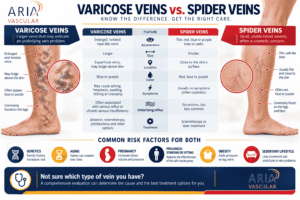
Varicose veins and CVI are closely related, but they aren't exactly the same thing.
Varicose veins describe enlarged, twisted superficial veins.
Chronic venous insufficiency describes impaired venous circulation.
Some people have visible varicose veins without significant symptoms.
Others have varicose veins associated with underlying venous reflux, swelling, skin changes, or other signs of chronic venous disease.
Can You Have CVI Without Obvious Varicose Veins?
Yes.
Varicose veins are one possible sign of chronic venous disease, but they aren't required for CVI to be present.
A patient may instead experience:
- Swelling
- Aching
- Heaviness
- Skin discoloration
- Itching
- Tissue changes
This is another reason symptoms and diagnostic testing can sometimes be more informative than appearance alone.
Skin Changes Caused by Chronic Venous Insufficiency
As venous pressure remains elevated over time, CVI can begin affecting the skin and tissues surrounding the veins.
These changes often occur around the lower leg and ankle.
Brown or Darkened Skin
Blood cells and fluid can move into surrounding tissues when venous pressure remains elevated. Over time, this may contribute to brown, reddish, or darker discoloration.
Stasis Dermatitis
Some patients develop stasis dermatitis, an inflammatory skin condition associated with chronic venous pooling.
The skin may become:
- Itchy
- Red
- Dry
- Scaly
- Irritated
- Cracked
- Weepy or inflamed
Thickened or Hardened Skin
More advanced chronic venous disease can cause the skin and underlying tissue around the lower leg or ankle to become firm or hardened.
This condition is called lipodermatosclerosis.
These changes shouldn't simply be dismissed as dry or aging skin when they occur alongside swelling or other venous symptoms.
What Is a Venous Ulcer?
A venous ulcer is an open wound associated with chronic venous hypertension.
These ulcers commonly develop in the lower leg, often around the ankle.
Before an ulcer develops, a patient may already have:
- Chronic swelling
- Skin discoloration
- Itching
- Hardened skin
- Varicose veins
- Other signs of venous insufficiency
A venous ulcer may appear as a shallow open sore with surrounding discolored or irritated skin.
These wounds need medical attention.
Treating the wound itself is important, but clinicians may also need to address the underlying venous problem contributing to poor healing.
Does Everyone With CVI Develop Ulcers?
No.
This is an important distinction.
Venous disease exists on a spectrum.
Some patients experience only mild symptoms. Others develop varicose veins or swelling. A smaller group develops more significant skin changes or ulcers.
Not every patient follows this pathway. Patients can present at different points along the spectrum, and many people with CVI never develop advanced disease.
How Doctors Describe the Severity of Chronic Venous Disease
Vascular specialists may use a standardized system known as the CEAP classification to describe chronic venous disease.
| CEAP Class | Clinical Description |
|---|---|
| C0 | No visible or palpable signs of venous disease |
| C1 | Spider veins or reticular veins |
| C2 | Varicose veins |
| C3 | Edema or swelling |
| C4 | Skin or subcutaneous tissue changes related to venous disease |
| C5 | Healed venous ulcer |
| C6 | Active venous ulcer |
CEAP is a classification system—not a prediction. A patient classified as C1 or C2 is not expected to automatically progress through each category to C6.
Chronic Venous Insufficiency After a DVT
CVI can sometimes develop after a deep vein thrombosis.
A DVT can injure the vein wall and damage the valves responsible for controlling blood flow.
Even after the original clot has been treated or resolved, the damaged vein may no longer function normally.
Some patients subsequently experience:
- Chronic swelling
- Aching
- Heaviness
- Skin discoloration
- Varicose veins
- Skin changes
- Venous ulcers
This chronic condition following DVT is often called post-thrombotic syndrome.
A history of DVT is therefore important information to share during a vascular evaluation.
Is Chronic Venous Insufficiency the Same as a Blood Clot?
No.
CVI is a chronic circulation problem.
A DVT is a blood clot within a deep vein.
The two conditions are different, although they can be related because a previous DVT may damage vein valves and contribute to chronic venous insufficiency later.
This distinction matters because new symptoms of DVT require prompt medical evaluation.
When Should Leg Symptoms Be Evaluated Promptly?
Most chronic venous symptoms don't require emergency treatment. However, don't assume every new leg symptom is simply CVI.
Seek Prompt Medical Evaluation For:
- Sudden increase in swelling
- Sudden or significant leg pain
- Redness or warmth
- A newly painful or hard vein
- Fever associated with leg redness or swelling
- A new or worsening leg wound
- Bleeding from a varicose vein
Seek Emergency Medical Care For:
- Unexplained shortness of breath
- Chest pain
- Fainting
- Coughing up blood
- Severe difficulty breathing
These symptoms can occur with a pulmonary embolism and require emergency evaluation.
How Is Chronic Venous Insufficiency Diagnosed?
Diagnosis usually begins with a medical history and physical examination.
Your vascular specialist may ask about:
- Leg pain or heaviness
- Swelling
- How symptoms change throughout the day
- Varicose veins
- Skin changes
- Wounds
- Previous DVT
- Previous vein treatment
- Pregnancy history
- Family history
- Occupation and activity level
The legs may be examined for:
- Varicose veins
- Edema
- Skin discoloration
- Stasis dermatitis
- Hardened tissue
- Ulcers
- Other signs of vascular disease
For many patients, duplex ultrasound provides important additional information.
What Is a Venous Duplex Ultrasound?
A venous duplex ultrasound is a noninvasive imaging test that uses sound waves to evaluate the veins.
It combines images of the vein with information about blood flow.
The test can help clinicians assess:
- The direction of blood flow
- Valve function
- Venous reflux
- Vein anatomy
- Obstruction
- Possible blood clots
Ultrasound doesn't use ionizing radiation.
Are Other Imaging Tests Ever Needed?
Sometimes.
Duplex ultrasound is commonly used to evaluate venous disease, but certain patients may require additional imaging if the problem appears more complex or if obstruction is suspected deeper within the pelvis or abdomen.
The appropriate test depends on the patient's symptoms, history, physical examination, and ultrasound findings.
Not everyone with CVI needs advanced imaging.
How Is Chronic Venous Insufficiency Treated?
There isn't one treatment that is right for every patient.
Treatment depends on factors such as:
- Severity of symptoms
- Location of abnormal veins
- Presence of reflux or obstruction
- Swelling
- Skin changes
- Ulcers
- Previous DVT
- Overall health
- Patient goals
Treatment can range from conservative management to minimally invasive procedures.
Conservative Treatment for CVI
Walking and Regular Exercise
Walking activates the calf muscle pump. When your calf muscles contract, they help compress veins and move blood upward.
Avoiding Prolonged Inactivity
If your work involves sitting or standing for long periods, changing position and walking periodically can help keep the calf muscles active.
Leg Elevation
Elevating the legs can reduce venous pressure and swelling for some patients.
Weight Management
Maintaining a healthy weight can reduce additional pressure on the veins.
Skin Care
Patients with chronic swelling or skin changes may need specific skin-care recommendations to help protect the lower legs.
Wound Care
Venous ulcers require appropriate wound management. Depending on the situation, treatment may involve compression, dressings, infection management when necessary, and evaluation of the underlying venous circulation.
How Do Compression Stockings Help?
Compression stockings apply graduated pressure to the leg.
This pressure can help support venous return and reduce swelling.
Compression may help patients experiencing:
- Leg swelling
- Aching
- Heaviness
- Venous symptoms associated with prolonged standing
Compression garments come in different strengths and sizes.
The appropriate type depends on the patient's condition, and compression isn't necessarily appropriate for every person. A healthcare professional can help determine the correct approach, particularly when other circulation problems may be present.
Compression can help control symptoms, but it doesn't necessarily repair an abnormal valve or eliminate an existing source of venous reflux.
When Is a Procedure Considered?
A procedure may be considered when symptoms remain significant, complications develop, or diagnostic testing identifies a treatable venous abnormality.
Examples include:
- Persistent pain or heaviness
- Significant swelling
- Symptomatic varicose veins
- Skin changes
- Recurrent inflammation
- Venous ulcers
- Clinically significant venous reflux
The decision should be based on the patient's anatomy and underlying problem—not simply the appearance of the leg.
Endovenous Ablation
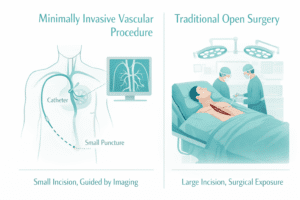
One common approach for certain abnormal superficial veins is endovenous ablation.
A physician places a thin catheter into the affected vein using image guidance.
Energy is then delivered inside the vein to close it.
Radiofrequency Ablation
Radiofrequency energy generates controlled heat that closes the abnormal vein.
Endovenous Laser Ablation
Laser energy is used to close the vein.
Once the unhealthy vein is closed, blood can redirect through other functioning veins.
Sclerotherapy
Sclerotherapy involves injecting a medication into an abnormal vein.
The medication causes the vein to close, after which blood is redirected through other veins.
Different forms of sclerotherapy may be used depending on the type and size of vein being treated.
Phlebectomy
Selected surface varicose veins may be treated with ambulatory phlebectomy.
Small openings are made in the skin, allowing abnormal superficial veins to be removed.
The technique may be used alone or alongside treatment of underlying venous reflux.
What Happens to Blood After a Vein Is Closed?
This is one of the most common questions patients have about vein treatment.
The goal isn't to close a healthy vein that your leg depends on.
Treatment targets veins that have been identified as abnormal.
Your legs contain an extensive network of veins. When an unhealthy superficial vein is appropriately closed, blood can redirect through other functioning veins.
This is why vascular imaging and proper diagnosis are important before treatment.
Does Treatment Cure Chronic Venous Insufficiency?
Treatment can correct or reduce specific sources of abnormal venous flow and help manage symptoms, but chronic venous disease can require ongoing attention.
A patient's underlying tendency toward venous disease may remain.
New abnormal veins can develop over time, and some patients—particularly those with previous DVT or more complex venous disease—may require continued management.
Long-term care can include:
- Regular physical activity
- Weight management
- Compression when recommended
- Skin care
- Monitoring for new swelling or skin changes
- Follow-up vascular evaluation when appropriate
What Is Recovery Like After Minimally Invasive Vein Treatment?
Recovery depends on the procedure and the individual patient.
Many modern vein procedures can be performed on an outpatient basis.
Depending on the procedure, instructions may include:
- Walking
- Wearing compression
- Caring for the treatment site
- Avoiding strenuous activity temporarily
- Returning for follow-up
- Undergoing follow-up ultrasound when indicated
Your treatment team will provide instructions based on your particular procedure and medical history.
Can Chronic Venous Insufficiency Be Prevented?
Not every case can be prevented.
Genetics, aging, previous DVT, pregnancy, and other factors aren't always controllable.
However, supporting healthy circulation may help reduce symptoms or some risk factors.
Helpful habits can include:
- Walking regularly
- Exercising
- Avoiding prolonged inactivity
- Maintaining a healthy weight
- Elevating the legs when appropriate
- Following compression recommendations
- Taking care of the skin
- Managing a previous DVT according to your physician's instructions
Myth vs. Fact: Chronic Venous Insufficiency
MYTH: CVI simply means poor circulation.
FACT: CVI specifically involves difficulty returning blood through the venous system. Other circulation problems—particularly arterial disease—have different causes and may require different treatment.
MYTH: CVI only affects people with large varicose veins.
FACT: Varicose veins are one possible sign, but patients can experience swelling, heaviness, skin changes, or other symptoms without dramatic surface veins.
MYTH: Everyone with CVI eventually develops a leg ulcer.
FACT: Venous disease varies considerably. Many patients never develop advanced skin breakdown or ulcers.
MYTH: Compression stockings cure damaged vein valves.
FACT: Compression can help support circulation and control symptoms, but it doesn't normally repair an incompetent venous valve.
MYTH: If treatment closes a vein, blood won't be able to leave the leg.
FACT: When treatment is appropriately selected, abnormal veins are targeted and blood redirects through other functioning veins.
Frequently Asked Questions About Chronic Venous Insufficiency
Is chronic venous insufficiency serious?
CVI ranges considerably in severity. Many patients experience manageable symptoms such as aching, heaviness, varicose veins, or swelling. More advanced disease can contribute to significant skin changes and venous ulcers. Evaluation can help determine the severity and appropriate management.
What are the first signs of chronic venous insufficiency?
Early symptoms may include aching, heaviness, cramping, itching, ankle swelling, or visible varicose veins. Symptoms may become more noticeable after prolonged standing.
What does venous insufficiency look like?
Possible visible signs include varicose veins, ankle swelling, brown or reddish skin discoloration, irritated skin, thickened tissue, and, in advanced cases, open sores around the lower leg or ankle.
What is the difference between venous reflux and chronic venous insufficiency?
Venous reflux describes backward blood flow caused by valves that don't close effectively. Chronic venous insufficiency describes the broader clinical condition that can result when the venous system cannot efficiently return blood from the legs.
Can chronic venous insufficiency be reversed?
The answer depends on the cause and anatomy. Lifestyle changes and compression can help manage symptoms, while procedures can treat certain abnormal veins or sources of reflux. Existing valve damage isn't necessarily restored by conservative treatment, so management generally focuses on improving circulation, controlling symptoms, addressing treatable abnormalities, and reducing complications.
Does walking help chronic venous insufficiency?
Walking activates the calf muscle pump, which helps move venous blood upward from the legs. Regular exercise is commonly recommended as part of CVI management.
Is chronic venous insufficiency the same as peripheral artery disease?
No. Chronic venous insufficiency affects the veins, which return blood toward the heart. Peripheral artery disease affects the arteries, which deliver oxygen-rich blood to the legs. The conditions have different causes and treatments, although some symptoms can overlap.
What type of doctor treats chronic venous insufficiency?
Vascular specialists evaluate and treat diseases of the circulatory system. Depending on the condition and treatment needed, care may involve vascular surgeons and interventional specialists experienced in venous disease.
Chronic Venous Insufficiency Care at Aria Vascular
Chronic venous insufficiency isn't simply about what can be seen on the surface.
At Aria Vascular, our approach focuses on understanding why symptoms are occurring.
A comprehensive vascular evaluation can help determine whether leg swelling, varicose veins, skin changes, discomfort, or other symptoms are associated with venous reflux, previous DVT, obstruction, or another vascular condition.
When treatment is appropriate, the plan can be based on the patient's symptoms, venous anatomy, imaging findings, medical history, and individual needs.
Aria Vascular provides comprehensive vascular and interventional care for patients in Stockton, San Joaquin County, and surrounding Central Valley communities.
The Bottom Line
Chronic venous insufficiency develops when the veins have difficulty returning blood efficiently from the legs toward the heart.
For some people, the first sign may be nothing more than tired or heavy legs.
For others, CVI may cause:
But venous disease doesn't progress the same way in everyone.
What matters is recognizing persistent changes and understanding what is happening beneath the surface.
If your legs regularly ache, swell, feel heavy, develop visible veins, or show changes in the skin around the ankles, a vascular evaluation can help determine whether venous disease is contributing to your symptoms.
Experiencing Symptoms of Chronic Venous Insufficiency?
Persistent leg swelling, heaviness, aching, varicose veins, skin discoloration, or slow-healing wounds may be signs that your venous circulation deserves a closer look.
Aria Vascular can evaluate your circulation and help determine whether additional testing or treatment may be appropriate.
Schedule a Vascular ConsultationMedical References
This patient education guide was developed using information and clinical guidance from authoritative medical and vascular organizations, including:
- Society for Vascular Surgery (SVS)
- MedlinePlus — U.S. National Library of Medicine
- RadiologyInfo.org — American College of Radiology and Radiological Society of North America
- Society of Interventional Radiology (SIR)
- American Venous Forum (AVF)
This article is intended for general patient education and is not a substitute for individualized medical advice, diagnosis, or treatment. Patients with new or concerning symptoms should consult an appropriate healthcare professional.