Varicose Veins vs. Spider Veins: What’s the Difference?
Visible veins on your legs are common, but not all visible veins are the same. Some appear as tiny red, blue, or purple lines just beneath the skin. Others become enlarged, twisted, raised veins that may ache, swell, or make your legs feel heavy.
These are commonly known as spider veins and varicose veins.
Although the two conditions can look similar and sometimes occur together, there are important differences. Spider veins are usually smaller and often primarily a cosmetic concern. Varicose veins are larger and may be associated with problems in the way blood flows through the veins of the legs.
For some patients, varicose veins can be a visible sign of an underlying condition such as chronic venous insufficiency (CVI) or venous reflux.
Understanding the difference can help you decide when visible veins are simply something you would like treated for appearance and when they deserve a vascular evaluation.
Key Takeaways
- Spider veins are small red, blue, or purple blood vessels visible near the skin's surface.
- Varicose veins are larger, enlarged or twisted veins that may bulge above the skin.
- Spider veins are often primarily cosmetic, although they can occasionally cause symptoms.
- Varicose veins can cause aching, heaviness, itching, swelling, and other symptoms.
- Varicose veins may be associated with underlying venous reflux or chronic venous insufficiency.
- A venous ultrasound can help determine whether an underlying circulation problem is contributing to symptoms.
- Treatment ranges from lifestyle changes and compression to minimally invasive procedures such as sclerotherapy and vein ablation.
What Are Varicose Veins?
Varicose veins are enlarged, swollen, or twisted veins that usually develop in the legs.
They may appear:
- Blue or purple
- Rope-like
- Twisted
- Raised above the skin
- Bulging or enlarged
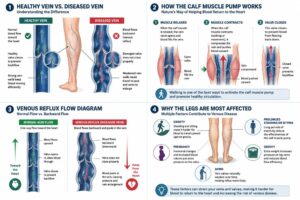
Varicose veins develop when blood does not move efficiently through a vein. Normally, one-way valves inside the leg veins help blood travel upward toward the heart. If those valves weaken or stop closing properly, blood can flow backward and collect inside the vein.
This backward flow is known as venous reflux.
As blood accumulates, pressure increases inside the vein. Over time, the vein can stretch, enlarge, and become visible beneath the skin.
Common Symptoms of Varicose Veins
- Aching or throbbing
- Heavy or tired legs
- Burning
- Itching
- Leg or ankle swelling
- Nighttime leg cramps
- Tenderness around the vein
- Skin discoloration
- Symptoms that worsen later in the day
More advanced venous disease can also cause persistent swelling, changes in the skin around the ankle, and wounds that are difficult to heal.
What Are Spider Veins?
Spider veins are much smaller blood vessels that become visible near the surface of the skin.
They often look like:
- Thin red lines
- Blue or purple branches
- Small webs
- Clusters of tiny blood vessels
Their web-like appearance is where the name spider veins comes from.
Unlike varicose veins, spider veins generally do not bulge significantly above the skin.
They are often found on the:
- Thighs
- Calves
- Ankles
- Face
Spider veins are usually primarily a cosmetic concern and generally do not cause the same problems as larger symptomatic varicose veins.
However, spider veins and varicose veins can occur in the same person. If you have spider veins along with swelling, aching, heaviness, or larger varicose veins, a vascular specialist may evaluate whether an underlying venous condition is present.
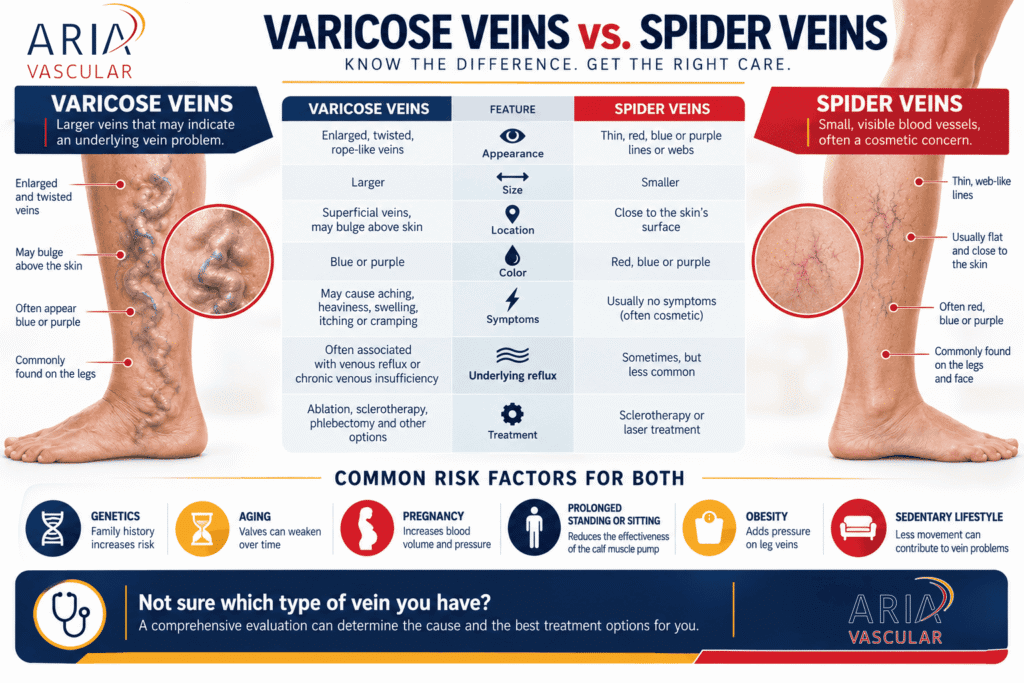
Spider Veins vs. Varicose Veins: Quick Comparison
| Feature | Varicose Veins | Spider Veins |
|---|---|---|
| Appearance | Enlarged, twisted or rope-like veins | Fine red, blue or purple lines or webs |
| Size | Larger | Smaller |
| Location | Superficial veins that may visibly protrude | Close to the skin's surface |
| Typical Symptoms | Aching, heaviness, swelling, itching or burning | Usually none or mild |
| Primary Concern | Cosmetic and/or medical | Often cosmetic |
| Underlying Reflux | More commonly associated | Possible, but less commonly associated |
| Evaluation | Recommended when symptomatic or progressive | Depends on symptoms and associated findings |
| Common Treatments | Ablation, sclerotherapy, phlebectomy or other targeted treatment | Sclerotherapy or surface laser treatment |
The appearance of a vein alone does not tell the complete story. Symptoms and ultrasound findings are often more important when determining whether treatment is medically appropriate.
What Causes Varicose and Spider Veins?
Several factors can contribute to visible veins.
Genetics
Family history plays an important role. If close relatives have varicose veins, you may be more likely to develop them.
Aging
Vein walls and valves can weaken over time, which is one reason visible veins become more common with age.
Pregnancy
Pregnancy increases blood volume and pressure within the veins. Hormonal changes can also affect vein walls, making varicose and spider veins more likely to develop.
Prolonged Standing or Sitting
Remaining in the same position for long periods reduces the effectiveness of the calf muscle pump that normally helps move blood toward the heart.
Obesity
Additional body weight can increase pressure on the veins in the legs.
Previous Blood Clots
A previous deep vein thrombosis (DVT) can damage venous valves and contribute to chronic problems with blood returning from the legs.
When Are Varicose Veins More Than a Cosmetic Problem?
This is one of the most important distinctions for patients to understand.
A visible varicose vein does not automatically mean you have a serious vascular condition. Some people have prominent veins for years without significant symptoms.
However, varicose veins can also develop because the valves within the veins are not functioning properly.
When this happens, symptoms may indicate chronic venous disease rather than simply a cosmetic issue.
Signs that deserve further evaluation include:
- Persistent leg swelling
- Aching or throbbing
- Heavy or tired legs
- Burning or itching
- Increasing numbers of varicose veins
- Skin becoming darker around the ankles
- Thickened or irritated skin
- Open or slow-healing sores
- Recurrent inflammation around a vein
If your veins look different but your legs feel normal, the concern may primarily be cosmetic. If your veins are accompanied by pain, swelling, heaviness, skin changes, or wounds, it is worth investigating what is happening beneath the surface.
What Is Chronic Venous Insufficiency?
Chronic venous insufficiency (CVI) occurs when the veins have difficulty returning blood efficiently toward the heart.
One common mechanism is damaged or weakened valves.
Instead of blood continuing upward, some flows backward and accumulates in the legs. Over time, the resulting pressure can contribute to:
- Swelling
- Aching
- Varicose veins
- Skin inflammation
- Skin discoloration
- Tissue changes
- Venous ulcers
Varicose veins can therefore be one visible manifestation of a larger circulation problem, although not everyone with varicose veins has advanced chronic venous insufficiency.
Are Spider Veins Dangerous?
Most spider veins are not dangerous.
They generally remain near the surface of the skin and are commonly treated for cosmetic reasons.
That does not mean they should automatically be ignored.
Consider discussing them with a healthcare provider if they occur along with:
- Significant leg swelling
- Aching or heaviness
- Large varicose veins
- Skin changes
- Previous DVT
- Other symptoms of venous disease
The goal is not necessarily to treat every visible vein, but to determine whether the visible veins are part of a broader circulation problem.
Are Varicose Veins Dangerous?
Many varicose veins do not lead to serious complications.
However, poor venous circulation can sometimes contribute to problems including:
- Chronic swelling
- Skin inflammation
- Skin discoloration
- Bleeding from superficial veins
- Superficial vein inflammation or clotting
- Venous ulcers
This is why the decision to evaluate or treat varicose veins should consider symptoms and circulation, not appearance alone.
How Are Varicose Veins Diagnosed?
Evaluation typically begins with a medical history and physical examination.
Your vascular specialist may ask about:
- When the veins first appeared
- Pain or heaviness
- Swelling
- Previous blood clots
- Pregnancy history
- Family history
- Previous vein treatments
- How symptoms change throughout the day
The legs are also examined for visible veins, swelling, skin changes, wounds, and other signs of venous disease.
Duplex Ultrasound
When clinically appropriate, a duplex venous ultrasound can provide much more information.
Ultrasound uses sound waves to evaluate both the structure of the veins and the way blood moves through them.
It can help identify:
- Venous reflux
- Abnormal valve function
- Veins contributing to varicosities
- Obstruction
- Blood clots
The test is noninvasive and does not use ionizing radiation.
Treatment for Spider Veins
Treatment is not necessary for every patient.
If spider veins are primarily cosmetic and do not bother you, observation may be perfectly reasonable.
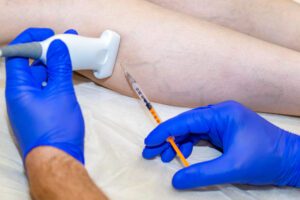
Sclerotherapy
A medication is injected directly into the targeted vein, causing it to close. The treated vessel gradually becomes less visible as the body redirects blood through healthier vessels.
Sclerotherapy is commonly used for spider veins and selected small varicose veins.
Surface Laser Treatment
Laser energy applied through the skin can be used for certain small superficial vessels.
The appropriate treatment depends on the size, location, and type of veins involved.
Treatment for Varicose Veins
Treatment depends on symptoms, anatomy, ultrasound findings, and the underlying cause.
Not everyone with varicose veins needs a procedure.
Lifestyle and Conservative Management
Your physician may recommend:
- Regular walking
- Avoiding prolonged sitting or standing
- Leg elevation
- Weight management
- Compression stockings when appropriate
Compression stockings apply graduated pressure to the legs and can help reduce swelling and feelings of aching or heaviness.
These measures can help manage symptoms but generally do not repair a damaged venous valve.
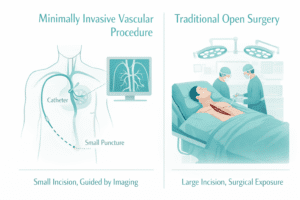
Minimally Invasive Varicose Vein Treatments
When symptoms persist or ultrasound identifies significant venous reflux, a vascular specialist may discuss procedures that target the malfunctioning vein.
Endovenous Laser Ablation
A thin catheter is inserted into the affected vein. Controlled laser energy closes the vein so blood can naturally reroute through healthier veins.
Radiofrequency Ablation
This approach uses radiofrequency-generated heat to close an abnormal vein.
Sclerotherapy
Sclerotherapy can be used for selected varicose veins as well as smaller spider veins.
Ambulatory Phlebectomy
Small surface varicose veins can be removed through very small skin openings.
The best treatment depends on the patient's anatomy and diagnosis rather than simply choosing a procedure based on how the vein looks.
What Happens to Blood After a Vein Is Closed?
This is a common patient concern.
Closing an unhealthy superficial vein does not stop circulation through the leg.
The body has an extensive network of veins. Once an abnormal superficial vein is closed, blood is naturally redirected through functioning veins that can return it toward the heart more efficiently.
Before recommending treatment, the vascular specialist evaluates the venous system to determine which veins are abnormal and which veins are responsible for healthy circulation.
What Is Recovery Like?
Recovery varies depending on the procedure and the individual patient.
Many modern varicose vein treatments are performed on an outpatient basis, and patients may be able to return to normal activities relatively quickly. Individual recovery instructions vary.
Your physician may recommend:
- Walking after treatment
- Temporary compression
- Avoiding strenuous activity for a period
- Follow-up ultrasound
- Monitoring the treatment area
Always follow the instructions provided for your specific procedure.
Can Varicose Veins Come Back?
Treatment can close or remove abnormal veins, but it cannot eliminate a person's underlying tendency to develop venous disease.
Over time, new varicose veins may develop in other vessels.
Maintaining an active lifestyle, managing weight, avoiding prolonged inactivity, and attending follow-up visits when recommended can help support long-term vein health.
When Should You See a Vascular Specialist?
Consider scheduling a vascular evaluation if you have visible veins accompanied by:
- Persistent swelling
- Aching or throbbing
- Leg heaviness
- Burning or itching
- Skin discoloration
- Recurrent vein inflammation
- Bleeding from a vein
- Slow-healing wounds
- Symptoms affecting your ability to walk, work, exercise, or sleep
A vascular specialist can determine whether the problem is primarily cosmetic or whether an underlying circulation disorder is present.
When Should You Seek Urgent Medical Care?
Visible veins themselves usually aren't an emergency. However, seek prompt medical attention for:
- Sudden swelling of one leg
- Sudden or severe leg pain
- Significant redness or warmth
- A painful, hard vein
- Unexplained shortness of breath
- Chest pain
- Coughing up blood
Sudden leg symptoms can sometimes indicate a blood clot. Chest pain, difficulty breathing, or coughing up blood can be signs of a pulmonary embolism and require emergency evaluation.
Varicose and Spider Vein Care at Aria Vascular
At Aria Vascular, we look beyond what can be seen on the surface.
Our multidisciplinary vascular team evaluates the underlying circulation to determine whether visible veins are cosmetic, related to venous reflux, or part of a more complex venous condition.
When treatment is appropriate, the goal is to develop an individualized plan based on your symptoms, anatomy, imaging findings, and overall vascular health.
Aria Vascular provides comprehensive vascular and interventional care for patients in Stockton, San Joaquin County, and surrounding Central Valley communities.
Frequently Asked Questions About Varicose and Spider Veins
Are spider veins the beginning of varicose veins?
Not necessarily. Spider veins and varicose veins involve different sizes and types of superficial vessels. Having spider veins does not mean they will automatically turn into large varicose veins.
Can spider veins indicate poor circulation?
Most spider veins are primarily cosmetic. However, if they occur along with swelling, aching, heaviness, skin changes, or larger varicose veins, a vascular evaluation may be appropriate.
Do varicose veins always mean I have chronic venous insufficiency?
No. Varicose veins vary considerably in severity. An examination and, when indicated, duplex ultrasound can determine whether significant venous reflux or another underlying problem is present.
Can exercise make varicose veins disappear?
Exercise generally will not remove an existing varicose vein, but walking and regular movement support the calf muscle pump and healthy venous circulation.
Do compression stockings get rid of varicose veins?
Compression can help manage swelling, aching, and heaviness, but it does not normally eliminate an existing varicose vein.
What type of doctor should evaluate symptomatic varicose veins?
A vascular specialist can evaluate the circulatory system, identify underlying venous disease, and determine whether conservative management, minimally invasive treatment, or another approach is appropriate.
The Bottom Line
Spider veins and varicose veins may both be visible beneath the skin, but they aren't necessarily the same problem.
Spider veins are smaller and are usually primarily cosmetic.
Varicose veins are larger veins that may develop when blood pools because of abnormal venous function. Some cause no significant symptoms, while others are associated with aching, swelling, heaviness, skin changes, or chronic venous insufficiency.
The important question isn't simply "Can I see my veins?"
It's "Are my veins functioning normally?"
If visible veins are accompanied by persistent symptoms or changes in your legs, a vascular evaluation can help identify the underlying cause and determine whether treatment is appropriate.
Concerned About Varicose Veins?
If you're experiencing varicose veins, leg swelling, heaviness, aching, or other symptoms of venous disease, the vascular specialists at Aria Vascular can evaluate your circulation and discuss treatment options based on your individual condition.
Schedule a ConsultationMedical References
This patient education resource was developed using information and clinical guidance from authoritative vascular and medical organizations, including:
- Society for Vascular Surgery (SVS)
- MedlinePlus — U.S. National Library of Medicine
- Society of Interventional Radiology (SIR)
- American Venous Forum (AVF)
- RadiologyInfo.org
This article is intended for general educational purposes and is not a substitute for individualized medical advice, diagnosis, or treatment. If you have questions about your symptoms or vascular health, speak with a qualified healthcare professional.