What You'll Learn
If you’ve recently been diagnosed with venous disease—or you’re experiencing symptoms such as leg swelling, varicose veins, aching legs, or skin changes—you may have questions about what this condition means and what your treatment options are.
Table of Contents
Introduction
Your veins play an essential role in keeping your body healthy. Every minute of every day, they work to carry blood back to your heart after oxygen has been delivered to your muscles, skin, and organs. When these veins stop working properly, blood can begin to pool in the legs, leading to a condition known as venous disease.
Venous disease is one of the most common vascular conditions in the United States, affecting millions of adults each year. While many people associate vein problems with cosmetic concerns such as varicose veins, venous disease is often a progressive medical condition that can lead to chronic leg pain, swelling, skin changes, slow-healing wounds, and other complications if left untreated.
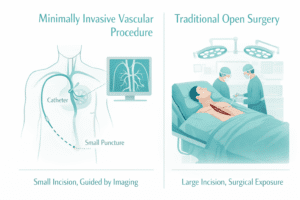
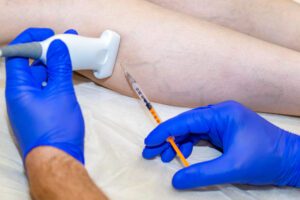
The good news is that modern vascular medicine has transformed the way venous disease is treated. Advances in interventional radiology and minimally invasive vascular procedures allow many patients to find lasting relief without the need for traditional open surgery. Most treatments are performed through tiny skin punctures, require little downtime, and allow patients to return to normal activities much sooner than in the past.
At Aria Vascular, our board-certified vascular surgeons and interventional radiologists provide comprehensive evaluation and personalized treatment for the full spectrum of venous disorders. Whether your symptoms are mild or more advanced, our goal is to restore healthy circulation, relieve discomfort, and help you maintain an active lifestyle.
Understanding your condition is the first step toward better vascular health. The sections below explain how venous disease develops, what symptoms to watch for, and the treatment options available today.
Key Takeaways
Venous Disease at a Glance
- Venous disease develops when veins have difficulty returning blood to the heart.
- Common symptoms include leg swelling, aching, heaviness, varicose veins, skin discoloration, and fatigue
- Risk factors include aging, family history, pregnancy, obesity, prolonged sitting or standing, and previous blood clots.
- Many cases can be successfully treated using minimally invasive procedures with little downtime.
- Early diagnosis and treatment can help prevent complications and improve quality of life.
💡 Patient Tip
Many people assume aching or heavy legs are simply part of getting older. While occasional fatigue can be normal, persistent symptoms—especially when accompanied by swelling or visible veins—may be an early sign of venous disease. An evaluation by a vascular specialist can help determine the underlying cause.
📊 Did You Know?
Chronic venous disorders affect millions of adults and become increasingly common with age. Although varicose veins are one of the most recognizable signs, venous disease includes a wide range of conditions that vary in severity. Early diagnosis and appropriate treatment can significantly reduce symptoms and lower the risk of long-term complications.
❌ Myth vs. ✅ Fact
Myth: Varicose veins are only a cosmetic concern.
Fact: While some varicose veins are primarily cosmetic, others are caused by chronic venous insufficiency—a medical condition that can lead to pain, swelling, skin damage, and venous ulcers if left untreated. A vascular evaluation can determine whether treatment is recommended based on your symptoms and vein function.
What Is Venous Disease?
Venous disease is a broad term used to describe conditions that affect the veins, the blood vessels responsible for carrying blood back to the heart. Unlike arteries, which deliver oxygen-rich blood from the heart to the rest of the body, veins must work against gravity—especially in the legs—to return blood upward.
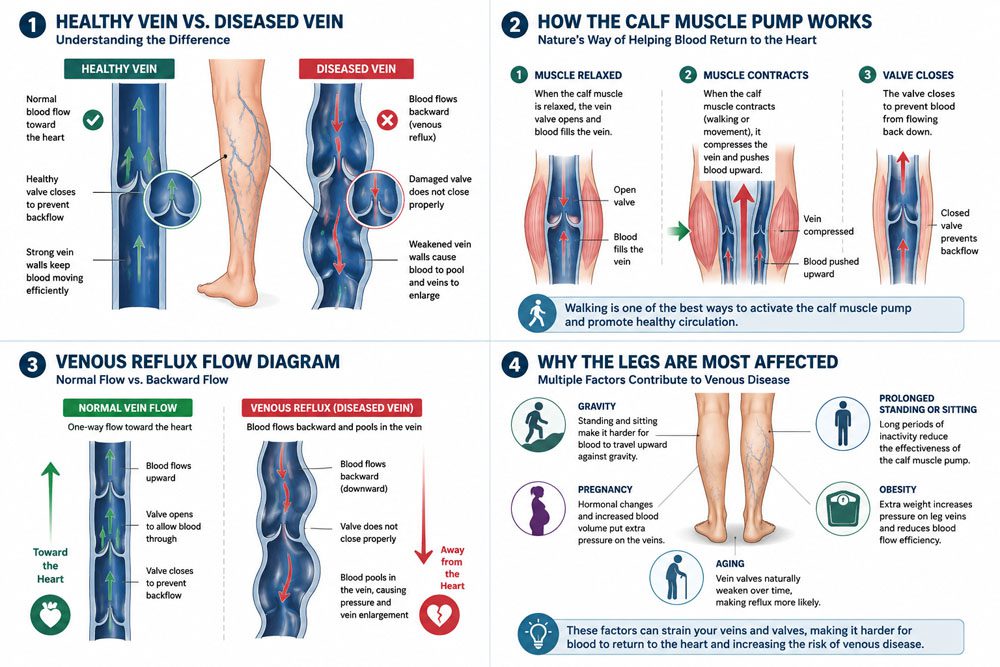
Healthy veins contain one-way valves that open and close with each heartbeat and muscle movement. These valves keep blood moving in the correct direction and prevent it from flowing backward.
When these valves become weakened or damaged, blood can begin to leak backward and collect inside the veins, a condition known as venous reflux. Over time, this increases pressure within the veins, causing them to enlarge and function less efficiently. The result may be swelling, aching, heaviness, skin changes, or visible varicose veins.
Many people think of venous disease as simply having “bad veins,” but it is often a progressive medical condition. Without treatment, it can continue to worsen and may eventually lead to chronic venous insufficiency, venous ulcers, recurrent blood clots, or other complications.
Venous disease can affect veins throughout the body, but it most commonly involves the lower extremities, where gravity places the greatest demand on the venous system.
How Healthy Veins Work
To understand venous disease, it helps to first understand how healthy veins normally function.
Your circulatory system consists of two main types of blood vessels:
- Arteries, which carry oxygen-rich blood away from the heart.
- Veins, which return oxygen-poor blood back to the heart and lungs.
After oxygen has been delivered to your muscles, skin, and organs, veins begin the journey back to the heart. Unlike arteries, veins operate under much lower pressure. They rely on several natural mechanisms to keep blood moving efficiently.
The Calf Muscle Pump
One of the body’s most remarkable circulation systems is found in your legs.
Every time you walk, climb stairs, or flex your calf muscles, those muscles gently squeeze the deep veins in your legs. This action pushes blood upward toward the heart.
Because of this important role, the calf muscles are often referred to as the “second heart.”
Regular walking and movement help keep this natural pump working efficiently.
One-Way Vein Valves
Inside many veins are tiny one-way valves.
These valves open as blood travels upward and close immediately afterward to prevent blood from falling backward.
Think of them as a series of checkpoints that help blood climb against gravity.
When the valves remain healthy:
- Blood flows in one direction.
- Pressure inside the veins stays low.
- Circulation remains efficient.
- The legs feel comfortable and energized.
When these valves fail, blood begins to pool in the veins instead of returning smoothly to the heart.
The Role of Gravity
Gravity constantly pulls blood downward toward your feet.
Healthy veins are designed to overcome this challenge using:
- Strong vein walls
- Healthy one-way valves
- Active calf muscles
- Normal circulation
When any part of this system becomes weakened, gravity begins to work against the veins rather than with them. Over months or years, pressure builds inside the veins, leading to many of the symptoms associated with venous disease.
Understanding Venous Reflux
One of the most common causes of venous disease is venous reflux, sometimes called venous insufficiency.
Venous reflux occurs when damaged valves allow blood to flow backward instead of continuing toward the heart.
Rather than moving upward efficiently, blood begins to pool in the lower legs. This creates increased pressure inside the veins, stretching them over time.
As pressure continues to rise, patients may develop:
- Varicose veins
- Leg swelling
- Aching or heaviness
- Nighttime leg cramps
- Skin discoloration
- Venous ulcers in advanced stages
Venous reflux is a progressive condition, meaning it often worsens gradually if left untreated. Fortunately, many modern treatments are designed to correct the underlying reflux rather than simply addressing the visible veins.
💡 Patient Tip
Varicose veins are often a symptom—not the root cause—of venous disease. Treating the underlying venous reflux can relieve symptoms and reduce the chance of future vein problems.
Why Venous Disease Most Commonly Affects the Legs
Although veins are located throughout the body, venous disease most often develops in the legs.
There are several reasons for this:
Gravity
Blood in the legs must travel the greatest distance upward to reach the heart, making the lower extremities especially dependent on healthy valves and muscle function.
Standing and Sitting
Many occupations require prolonged standing or sitting, reducing the effectiveness of the calf muscle pump and allowing blood to collect in the legs.
Daily Wear and Tear
Over many years, repeated stress on the vein walls and valves can cause them to weaken naturally with age.
Increased Pressure
Conditions such as pregnancy, obesity, and previous blood clots increase pressure inside the veins, making valve damage more likely.
These factors explain why symptoms such as swelling, heaviness, and visible veins almost always begin in the lower legs before progressing to more advanced stages of venous disease.
📊 Did You Know?
When you walk, your calf muscles help pump blood back toward your heart with every step. Even short walks throughout the day can support healthy circulation, which is one reason regular movement is often recommended as part of conservative treatment for venous disease.
❌ Myth vs. Fact
Myth: Only older adults develop venous disease.
Fact: While the risk increases with age, venous disease can affect younger adults as well—particularly those with a family history, occupations that involve prolonged standing, pregnancy-related vein changes, or a history of blood clots.
What Causes Venous Disease?
Understanding the Factors That Can Affect Your Vein Health
Most cases of venous disease develop gradually over many years. Unlike a broken bone or sudden injury, venous disease usually results from a combination of aging, genetics, lifestyle factors, and changes in the vein valves that occur over time.
Healthy veins rely on strong vein walls and properly functioning one-way valves to keep blood moving toward the heart. When these valves weaken or become damaged, blood can flow backward and collect inside the veins. This increased pressure stretches the veins and leads to many of the symptoms associated with venous disease.
For some people, the changes happen slowly and cause few symptoms at first. Others may notice leg heaviness, swelling, or visible varicose veins much earlier. Understanding what contributes to venous disease can help you recognize symptoms sooner and take steps to protect your vascular health.
The Most Common Causes of Venous Disease
Weakened or Damaged Vein Valves
The most common cause of chronic venous disease is damage to the one-way valves inside the veins.
Healthy valves allow blood to move upward while preventing it from flowing backward. When these valves stop closing completely, blood begins to pool in the lower legs instead of returning efficiently to the heart. This condition, known as venous reflux, is the underlying cause of many cases of chronic venous insufficiency and varicose veins.
Over time, increased pressure inside the veins can lead to:
- Enlarged veins
- Leg swelling
- Aching or heaviness
- Skin discoloration
- Venous ulcers in advanced stages
Previous Blood Clots (Deep Vein Thrombosis)
A history of deep vein thrombosis (DVT) can permanently damage the valves inside the veins.
Even after the blood clot has resolved, the affected vein may not function normally. This can lead to a long-term condition called Post-Thrombotic Syndrome (PTS), which causes chronic swelling, discomfort, skin changes, and an increased risk of venous ulcers.
Not everyone who develops a DVT will experience long-term complications, but ongoing follow-up with a vascular specialist may be recommended depending on the severity of the clot and your symptoms.
Increased Pressure Inside the Veins
Anything that increases pressure within the leg veins over time can contribute to venous disease.
Common examples include:
- Pregnancy
- Obesity
- Chronic constipation
- Heavy lifting over many years
- Standing for prolonged periods
This additional pressure places extra stress on the vein walls and valves, making them more likely to weaken.
Aging
As we age, the tissues that support our veins naturally lose some of their strength and elasticity.
Over time, vein walls may become less resilient and the valves may no longer close as tightly as they once did. This gradual process is one reason venous disease becomes more common later in life.
While aging increases risk, it does not mean vein disease is inevitable.
Risk Factors for Venous Disease
Certain factors make some people more likely to develop venous disease than others. Having one or more risk factors does not guarantee that you’ll develop vein problems, but it may increase your likelihood.
Family History
Genetics play a significant role in venous disease.
If one or both of your parents have experienced varicose veins or chronic venous insufficiency, your own risk may be higher. Inherited differences in vein wall strength and valve function can contribute to the condition.
Pregnancy
A history of deep vein thrombosis (DVT) can permanently damage the valves inside the veins.
Even after the blood clot has resolved, the affected vein may not function normally. This can lead to a long-term condition called Post-Thrombotic Syndrome (PTS), which causes chronic swelling, discomfort, skin changes, and an increased risk of venous ulcers.
Not everyone who develops a DVT will experience long-term complications, but ongoing follow-up with a vascular specialist may be recommended depending on the severity of the clot and your symptoms.
Increased Pressure Inside the Veins
Pregnancy places additional demands on the circulatory system.
Hormonal changes relax blood vessel walls, while the growing uterus increases pressure on the pelvic and leg veins. Blood volume also increases to support the developing baby.
Many pregnancy-related vein changes improve after delivery, but some women continue to experience persistent varicose veins or chronic venous insufficiency.
Occupations That Require Long Periods of Standing or Sitting
Jobs that limit movement can reduce the effectiveness of the calf muscle pump.
Examples include:
- Nurses
- Teachers
- Retail employees
- Hairstylists
- Factory workers
- Truck drivers
- Office professionals
Taking regular walking breaks and changing positions throughout the day can help promote healthy circulation.
Obesity
Excess body weight increases pressure inside the abdominal and leg veins, making it more difficult for blood to return to the heart.
Maintaining a healthy weight may reduce strain on the venous system and improve overall circulation.
Smoking
Smoking damages blood vessels throughout the body and contributes to poor vascular health. Although smoking is more commonly associated with arterial disease, it may also affect vein function and healing, particularly in people with other vascular conditions.
Quitting smoking benefits both arterial and venous circulation and lowers the risk of many cardiovascular diseases.
Lack of Physical Activity
Regular movement activates the calf muscle pump and supports healthy blood flow.
Long periods of inactivity—whether from a sedentary lifestyle, extended travel, or prolonged bed rest—can slow circulation and increase the risk of venous problems, including blood clots in certain individuals.
Previous Vein Conditions or Procedures
People who have previously experienced varicose veins, venous ulcers, DVT, or other venous disorders may have a higher likelihood of developing future vein-related problems and should continue routine follow-up when recommended.
💡 Patient Tip
Varicose veins are often a symptom—not the root cause—of venous disease. Treating the underlying venous reflux can relieve symptoms and reduce the chance of future vein problems.
📊 Did You Know?
Research has shown that chronic venous disease becomes more common with age, but it is not limited to older adults. Many people first notice symptoms in their 30s or 40s, especially if they have a family history or occupations that require prolonged standing.
❌ Myth vs. Fact
Myth: Crossing your legs causes varicose veins.
Fact: There is no strong evidence that simply crossing your legs causes varicose veins. The more significant risk factors include genetics, aging, pregnancy, obesity, and prolonged standing or sitting.
Signs, Symptoms & Types of Venous Disease
Many people live with venous disease for years before realizing something is wrong. Because symptoms often develop gradually, they are frequently mistaken for normal aging, standing too long at work, or simple fatigue.
In reality, venous disease is progressive. While symptoms may begin mildly, they can become more noticeable over time if the underlying circulation problem is not addressed.
Recognizing the early warning signs allows patients to seek treatment before more serious complications develop.
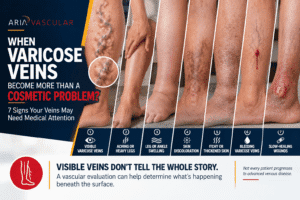
Common Signs and Symptoms of Venous Disease
Symptoms vary depending on the severity of the condition and which veins are affected. Some people experience only mild discomfort, while others develop chronic swelling or skin changes that interfere with daily activities.
Common symptoms include:
- Aching or tired legs
- A feeling of heaviness, especially later in the day
- Leg swelling, particularly around the ankles
- Visible varicose or enlarged veins
- Spider veins
- Burning or throbbing sensations
- Leg cramps, especially at night
- Itching around affected veins
- Restless legs
- Skin discoloration around the ankles
- Thickened or hardened skin
- Slow-healing wounds or ulcers near the ankles
Many patients notice that symptoms become worse:
- After standing for long periods
- After sitting for extended periods
- During hot weather
- Later in the day
- During pregnancy
Symptoms often improve after:
- Walking
- Elevating the legs
- Wearing compression stockings when recommended
- Resting
Why Symptoms Become Worse Over Time
Venous disease usually progresses slowly.
As blood continues to pool inside weakened veins, pressure increases within the venous system. This extra pressure stretches the vein walls and allows fluid to leak into the surrounding tissues.
Initially, patients may only notice tired or heavy legs.
Over time, however, they may begin to experience:
- More frequent swelling
- Larger varicose veins
- Skin irritation
- Brown discoloration around the ankles
- Thickened skin
- Open sores called venous ulcers
The earlier venous disease is identified, the more treatment options are typically available.
The Different Types of Venous Disease
Venous disease is not a single condition. Instead, it describes a group of disorders that affect the veins and interfere with healthy circulation.
Understanding the different types helps patients recognize symptoms and understand why treatment recommendations may vary.
Chronic Venous Insufficiency (CVI)
Chronic Venous Insufficiency (CVI) develops when the valves inside the veins no longer function effectively, allowing blood to flow backward and collect in the legs.
CVI is one of the most common forms of venous disease and may cause:
- Persistent swelling
- Leg heaviness
- Aching
- Skin discoloration
- Venous ulcers
Without treatment, CVI often progresses gradually over time.
Future Reading:
Understanding Chronic Venous Insufficiency (Coming Soon)
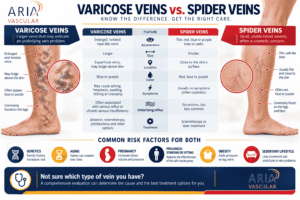
Varicose Veins
Varicose veins are enlarged, twisted veins that can often be seen just beneath the skin.
Although many people consider them a cosmetic concern, they frequently indicate underlying venous reflux or chronic venous insufficiency.
Symptoms may include:
- Leg aching
- Heaviness
- Itching
- Burning
- Swelling
- Tenderness
Modern minimally invasive treatments can effectively address both symptoms and the underlying vein dysfunction.
Future Reading:
Varicose Veins: Causes, Symptoms & Treatment
Spider Veins
Spider veins are smaller, thin red, blue, or purple veins that appear close to the surface of the skin.
While they are usually harmless, they may occasionally cause discomfort and can sometimes indicate underlying venous disease.
Deep Vein Thrombosis (DVT)
Deep Vein Thrombosis occurs when a blood clot forms inside one of the deep veins, most commonly in the legs.
Unlike varicose veins, DVT is a potentially serious medical condition because the clot can travel to the lungs and cause a pulmonary embolism.
Common symptoms include:
- Sudden leg swelling
- Pain or tenderness
- Warmth
- Redness
Not every patient experiences symptoms, making prompt medical evaluation important whenever DVT is suspected.
Future Reading:
Understanding Deep Vein Thrombosis (DVT)
Post-Thrombotic Syndrome (PTS)
Some patients continue to experience symptoms long after a DVT has resolved.
This condition is called Post-Thrombotic Syndrome.
Damage caused by the original clot may permanently affect the vein valves, resulting in:
- Chronic swelling
- Leg discomfort
- Skin changes
- Venous ulcers
Early treatment of DVT may reduce the likelihood of developing PTS.
Venous Ulcers
Venous ulcers are open wounds that most commonly develop around the ankles as a result of long-standing venous disease.
Persistent high pressure inside the veins reduces the skin’s ability to heal.
These wounds may be difficult to treat without correcting the underlying circulation problem.
Patients with non-healing leg wounds should seek evaluation by a vascular specialist.
Understanding the Progression of Venous Disease
Venous disease rarely develops overnight.
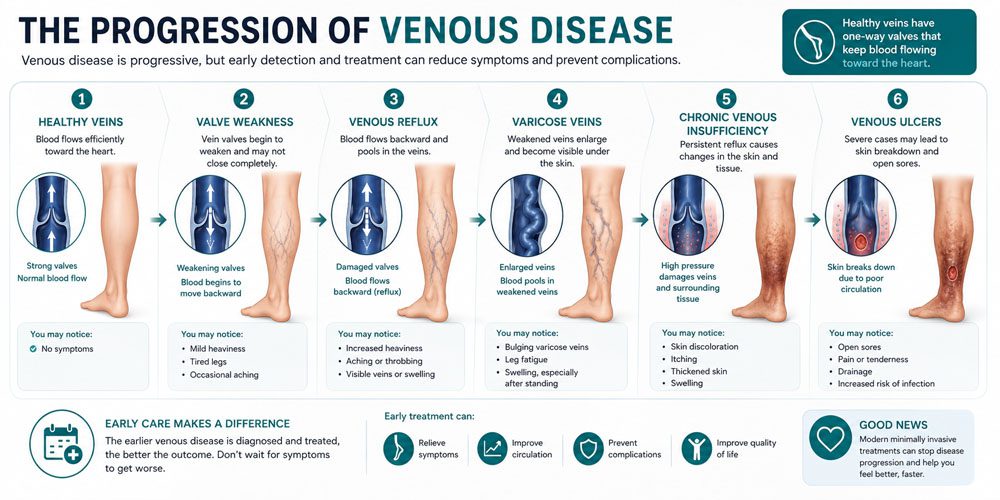
For many patients, the progression follows a predictable pattern:
Stage 1
Healthy veins with normal circulation.
Stage 2
Valve weakness develops.
Stage 3
Blood begins pooling inside the veins.
Stage 4
Symptoms such as heaviness, aching, and swelling appear.
These factors explain why symptoms such as swelling, heaviness, and visible veins almost always begin in the lower legs before progressing to more advanced stages of venous disease.
Stage 5
Visible varicose veins develop.
These factors explain why symptoms such as swelling, heaviness, and visible veins almost always begin in the lower legs before progressing to more advanced stages of venous disease.
Stage 6
Skin discoloration and chronic inflammation occur.
These factors explain why symptoms such as swelling, heaviness, and visible veins almost always begin in the lower legs before progressing to more advanced stages of venous disease.
Stage 7
Skin discoloration and chronic inflammation occur.
Not every patient progresses through every stage, and timely treatment can often slow or stop disease progression.
⚠️ When Symptoms Require Prompt Medical Attention
Although many symptoms of venous disease develop gradually, some require immediate medical evaluation.
Seek emergency medical care if you experience:
- Sudden swelling in one leg
- Severe leg pain without an obvious injury
- Chest pain
- Shortness of breath
- Coughing up blood
These symptoms may indicate a Deep Vein Thrombosis or Pulmonary Embolism and should never be ignored.
You should also schedule an appointment with a vascular specialist if you notice:
- Persistent leg swelling
- New varicose veins
- Skin discoloration around the ankles
- Slow-healing wounds
- Ongoing aching or heaviness in the legs
- Symptoms that interfere with walking or daily activities
Early diagnosis often allows for simpler treatment and helps reduce the risk of long-term complications.
💡 Patient Tip
Many people wait years before seeking treatment because they assume swollen or aching legs are simply part of getting older. While age can increase the risk of venous disease, persistent symptoms should always be evaluated to determine whether an underlying circulation problem is present.
📊 Did You Know?
Venous disease is progressive, but progression is not inevitable. Lifestyle changes, conservative therapies, and minimally invasive treatments can often relieve symptoms, improve circulation, and help prevent complications when the condition is diagnosed early.
❌ Myth vs. Fact
Myth: If varicose veins don’t hurt, they don’t need to be evaluated.
Fact: Some people with significant venous reflux have few or no symptoms. A vascular evaluation can determine whether the veins are functioning properly and identify problems before complications develop.