When Are Varicose Veins More Than a Cosmetic Problem?
Signs Your Veins May Need Medical Attention
For many people, varicose veins are something they first notice because of their appearance. A blue or purple vein becomes more prominent on the calf. A cluster of veins develops behind the knee. Or a vein that was barely noticeable years ago gradually becomes larger and more twisted.
It's easy to assume these changes are simply cosmetic.
Sometimes they are.
But varicose veins can also be a visible sign that blood isn't moving through the veins as efficiently as it should. When abnormal veins are accompanied by leg pain, heaviness, swelling, skin changes, inflammation, or wounds, there may be an underlying circulation problem that deserves medical evaluation.
The important question isn't necessarily how prominent a vein looks.
It's how well your veins are functioning—and whether they're beginning to affect your health or quality of life.
This guide explains when varicose veins may be more than a cosmetic concern, which symptoms to watch for, how vascular specialists evaluate them, and what treatment options are available.
Key Takeaways
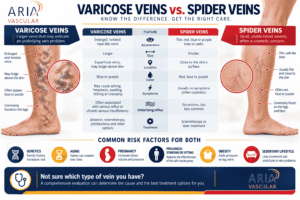
- Varicose veins are enlarged, twisted superficial veins that commonly develop in the legs.
- Some people have varicose veins without significant medical symptoms.
- Pain, heaviness, swelling, itching, skin discoloration, or wounds can indicate more significant venous disease.
- Varicose veins can be associated with venous reflux and chronic venous insufficiency (CVI).
- Duplex ultrasound can evaluate blood flow and determine whether abnormal vein valves or other venous problems are present.
- Lifestyle measures and compression can help some symptoms, while minimally invasive treatments may be appropriate for selected patients.
- Sudden leg swelling or pain requires prompt evaluation; chest pain or unexplained shortness of breath requires emergency medical attention.
What Are Varicose Veins?
Varicose veins are enlarged, swollen, or twisted veins that are visible beneath the skin. They occur most commonly in the legs.
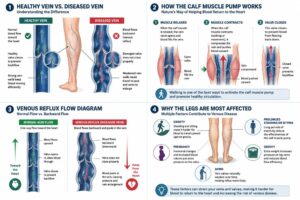
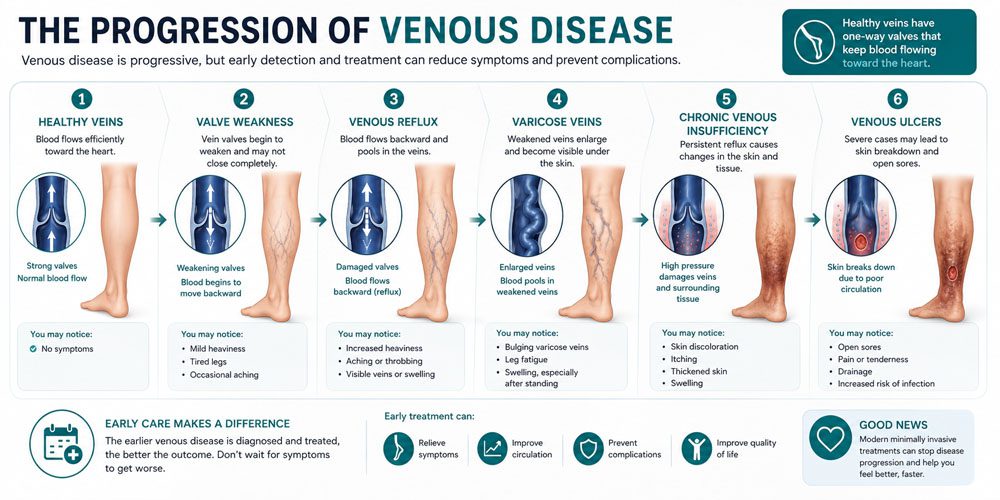
Healthy leg veins contain small one-way valves.
These valves open as blood travels toward the heart and close to help prevent blood from falling backward toward the feet.
When a valve weakens or doesn't close properly, some blood can move backward and collect inside the vein. This is called venous reflux.
As pressure increases inside the vein, it may stretch and enlarge. Eventually, it can become the bulging or rope-like vein we recognize as a varicose vein.
Not every visible varicose vein causes significant medical problems. The symptoms accompanying the vein are often more informative than appearance alone.
Cosmetic Varicose Veins vs. Medically Significant Vein Disease
This distinction is important.
Someone may have visible varicose veins for years without significant discomfort, swelling, or skin changes.
Another person may have veins that don't look particularly dramatic but experience substantial heaviness, aching, swelling, or skin changes because of underlying venous dysfunction.
A vascular evaluation considers the entire picture:
- Your symptoms
- How long you've had them
- Whether symptoms are worsening
- Swelling
- Skin changes
- Previous blood clots
- Medical history
- Physical examination
- Ultrasound findings when indicated
The goal isn't simply to decide whether a vein is unattractive. It is to determine whether there is an underlying circulation problem that should be managed.
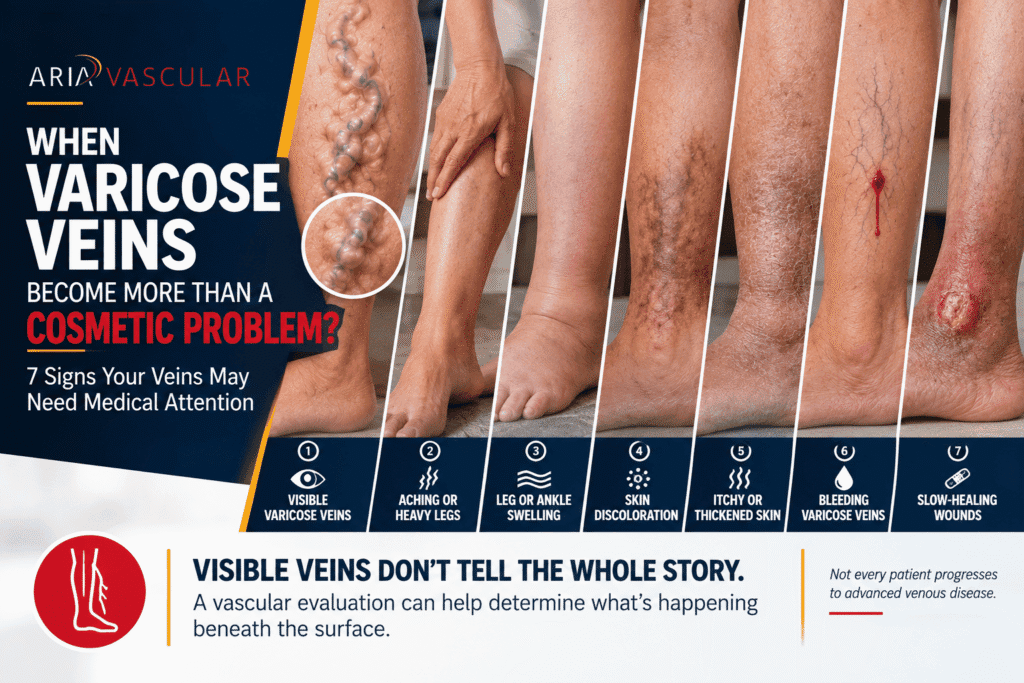
7 Signs Your Varicose Veins May Be More Than Cosmetic
Several changes can suggest that varicose veins are associated with more significant venous disease.
Your Legs Ache or Feel Heavy
One of the most common complaints associated with venous insufficiency is a dull ache, heaviness, or cramping in the legs. Symptoms may become more noticeable after prolonged standing and sometimes improve when the legs are elevated.
Patients sometimes describe their legs as:
- Heavy
- Tired
- Achy
- Throbbing
- Tight
- Uncomfortable after standing
This pattern can occur because gravity makes it more difficult for blood to return from the legs when venous valves aren't functioning effectively.
Pay attention to when your symptoms occur. Leg discomfort that consistently becomes worse after long periods of standing or later in the day can provide useful information during a vascular evaluation.
Your Legs or Ankles Are Swelling
Occasional mild swelling can have many causes and doesn't automatically mean you have venous disease.
However, persistent or recurring swelling—particularly when combined with visible varicose veins—deserves attention.
When venous pressure remains elevated, fluid can accumulate in the tissues of the lower leg and ankle.
You might notice:
- Sock marks becoming deeper
- Shoes feeling tighter later in the day
- Puffy ankles
- Swelling after prolonged standing
- Swelling that improves after elevating your legs
Persistent swelling should be evaluated because venous disease is only one possible cause. Other medical conditions can also cause leg swelling.
The Skin Around Your Ankles Is Changing Color
Changes in skin color around the lower leg or ankle can be an important sign of chronic venous disease.
As venous pressure remains elevated over time, blood and fluid can affect the surrounding tissues.
The skin may gradually become:
- Red
- Purple
- Brown
- Darker than the surrounding skin
This is different from simply being able to see a blue vein beneath otherwise healthy skin.
Persistent skin discoloration suggests that the surrounding tissue itself may be affected.
Your Skin Is Itchy, Inflamed, Thickened, or Hardened
Venous disease can eventually affect more than the veins.
Chronically elevated pressure can contribute to inflammation in the surrounding skin and tissues.
Patients may develop:
- Persistent itching
- Dry or flaky skin
- Redness
- Irritation
- Thickening
- Hardening around the lower leg or ankle
A condition called stasis dermatitis can develop when poor venous circulation contributes to fluid and blood components leaking into surrounding tissue.
More advanced chronic changes can include thickening and hardening of the skin and underlying tissue.
These changes deserve medical evaluation rather than simply being treated as dry skin.
A Varicose Vein Begins Bleeding
Varicose veins near the surface of the skin can sometimes bleed, particularly if the overlying skin becomes thin or the vein is injured.
Bleeding from a varicose vein should not simply be dismissed.
If active bleeding occurs, seek immediate medical care.
After the immediate problem is controlled, the underlying venous condition should also be evaluated.
You Develop a Slow-Healing Wound Near Your Ankle
A wound that isn't healing normally—particularly near the ankle or lower leg—can be a sign of advanced chronic venous disease.
These wounds are known as venous ulcers.
Long-term venous hypertension can damage the surrounding skin and tissue. Eventually, the skin can break down and form an open sore.
Venous ulcers require medical evaluation and appropriate wound care.
Treating the wound is important, but clinicians may also need to address the underlying circulation problem contributing to it.
A Vein Becomes Hard, Red, Warm, or Painful
A suddenly tender, firm, red, or inflamed superficial vein should be evaluated.
One possible cause is superficial thrombophlebitis, which involves inflammation and clotting within a superficial vein.
This isn't the same condition as a deep vein thrombosis (DVT), but distinguishing between superficial and deep venous problems may require medical evaluation.
How Varicose Veins Relate to Chronic Venous Insufficiency
Varicose veins and chronic venous insufficiency (CVI) are related, but they aren't interchangeable terms.
Varicose veins describe enlarged superficial veins.
Chronic venous insufficiency describes a broader problem in which the veins have difficulty returning blood efficiently from the legs toward the heart.
With CVI, damaged or malfunctioning valves can allow blood to remain in the legs, particularly while standing. A previous DVT can also damage vein valves and contribute to chronic venous insufficiency.
Possible manifestations include:
- Varicose veins
- Leg aching
- Heaviness
- Swelling
- Itching
- Skin discoloration
- Stasis dermatitis
- Thickened skin
- Venous ulcers
Not everyone with visible varicose veins has advanced CVI.
Likewise, the severity of venous disease can't reliably be determined by looking at the size of a surface vein alone.
That's one reason vascular evaluation and, when appropriate, ultrasound can be useful.
Do Varicose Veins Always Get Worse?
Not every patient follows the same course.
Some people have relatively stable varicose veins for years. Others experience increasing symptoms or additional signs of chronic venous disease.
It is therefore better to think of venous disease as a spectrum rather than assuming every patient progresses through the same stages.
This is not an inevitable sequence, and not everyone with varicose veins will develop advanced disease.
When Should You See a Vascular Specialist?
You don't necessarily need a vascular procedure simply because you can see a vein.
Consider an evaluation when varicose veins are accompanied by symptoms such as:
- Persistent aching
- Heaviness or fatigue
- Recurring swelling
- Burning or itching
- Increasing discomfort
- Skin discoloration
- Thickening or inflammation around the ankle
- Recurrent vein inflammation
- Bleeding
- A slow-healing wound
- Symptoms interfering with work, exercise, sleep, or normal activities
It may also be appropriate to seek evaluation if your varicose veins are worsening despite conservative measures.
When Is It an Emergency?
Most varicose veins are not emergencies. However, certain symptoms shouldn't wait for a routine appointment.
Seek Prompt Medical Evaluation For:
- Sudden increase in leg swelling
- Sudden or significant leg pain
- A red, warm, tender leg
- A newly hard and painful vein
- Fever associated with leg redness or swelling
- A new leg wound
- Bleeding from a varicose vein
Seek Emergency Medical Attention For:
- Unexplained shortness of breath
- Chest pain
- Coughing up blood
- Fainting or severe breathing difficulty
These symptoms can occur with a pulmonary embolism, which requires emergency medical care.
How Does a Vascular Specialist Evaluate Varicose Veins?
A vascular evaluation begins with more than simply looking at the visible vein.
Your specialist may ask:
- When did the veins appear?
- Are they becoming larger?
- Do your legs hurt?
- Do symptoms worsen while standing?
- Does elevation help?
- Is there swelling?
- Have you noticed skin changes?
- Have you ever had a blood clot?
- Have you been pregnant?
- Is there a family history of venous disease?
- Have you previously had vein treatment?
The physical examination may look for:
- Varicose veins
- Spider veins
- Swelling
- Skin discoloration
- Inflammation
- Thickened tissue
- Wounds or ulcers
- Other signs that could suggest a different vascular problem
If symptoms suggest underlying venous disease, the next step may be a duplex ultrasound.
What Is a Venous Duplex Ultrasound?
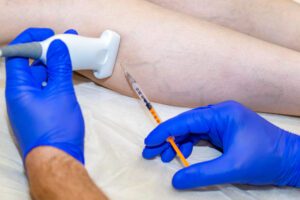
A duplex ultrasound is a noninvasive imaging test that uses sound waves to examine the veins and blood flow.
It can help identify:
- The direction of blood flow
- Venous reflux
- Abnormal valve function
- Veins contributing to varicosities
- Obstruction
- Possible blood clots
Ultrasound does not use ionizing radiation.
Most importantly, it helps answer a question that cannot always be answered just by looking at the leg:
Do All Varicose Veins Need Treatment?
No.
Treatment should be based on the individual patient.
Someone with mild, asymptomatic veins may choose observation.
Someone experiencing pain, swelling, progressive skin changes, bleeding, recurrent inflammation, or other complications may benefit from additional evaluation and treatment.
Factors considered include:
- Symptoms
- Ultrasound findings
- Vein anatomy
- Overall health
- Previous treatment
- Patient preferences
- Effect on daily life
The goal should be to treat the patient and underlying problem, not simply the appearance of a vein.
Conservative Treatment for Varicose Veins
Depending on your condition, treatment may begin with measures designed to support circulation and reduce symptoms.
Regular Walking and Exercise
The calf muscles help pump venous blood upward when you walk.
Avoiding Long Periods of Inactivity
Changing position and walking periodically can help activate the calf muscle pump.
Leg Elevation
Elevating the legs can help reduce pressure and swelling for some patients.
Weight Management
Maintaining a healthy weight can reduce additional pressure on the veins.
Compression Stockings
Graduated compression applies controlled pressure to the legs and can help reduce swelling and discomfort in appropriate patients.
These approaches can help manage symptoms, but they don't necessarily repair an abnormal vein valve.
Modern Minimally Invasive Treatment Options
When symptoms are significant or ultrasound identifies venous reflux, treatment may target the abnormal vein itself.
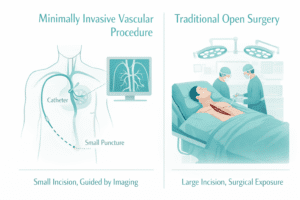
Modern treatment often avoids traditional open vein surgery.
Depending on the patient's anatomy and diagnosis, options may include:
Endovenous Laser Ablation
A thin catheter is placed into the abnormal vein. Controlled laser energy closes the vein.
Radiofrequency Ablation
Radiofrequency energy heats and closes an unhealthy vein.
Sclerotherapy
A medication or foam is injected into selected abnormal veins, causing them to close.
Ambulatory Phlebectomy
Selected surface varicose veins can be removed through very small skin openings.
The appropriate treatment depends on which veins are abnormal and why, which is why diagnosis comes before procedure selection.
What Happens When an Abnormal Vein Is Closed?
Patients sometimes worry that closing a vein will make their circulation worse.
In appropriately selected patients, treatment targets veins that are already functioning abnormally.
The legs contain an extensive network of veins. Once an unhealthy superficial vein is closed, blood can be redirected through other functioning veins.
A vascular specialist evaluates the venous anatomy before treatment to determine which veins are abnormal and which vessels are needed for healthy circulation.
What Is Recovery Like?
Recovery depends on the procedure performed and the individual patient.
Many contemporary vein procedures are performed in an outpatient setting.
After treatment, patients may receive instructions regarding:
- Walking
- Compression
- Exercise
- Bathing
- Caring for the treatment site
- Follow-up ultrasound
- Returning to work and normal activities
Your individual instructions may differ depending on the procedure and your medical history.
Can Treating Varicose Veins Prevent Future Veins?
Treating an abnormal vein addresses that particular vessel or source of reflux.
It doesn't eliminate every factor that contributed to venous disease in the first place.
Some people may develop new varicose veins over time.
Long-term vein health may therefore include:
- Staying physically active
- Maintaining a healthy weight
- Avoiding prolonged inactivity when possible
- Following compression recommendations when prescribed
- Monitoring for new symptoms
- Attending follow-up appointments when recommended
Myth vs. Fact: Understanding Varicose Veins
MYTH: Varicose veins are always cosmetic.
FACT: Some are primarily an appearance concern, but varicose veins can also be associated with venous reflux, pain, swelling, skin changes, and chronic venous insufficiency.
MYTH: The biggest-looking vein must be the worst one.
FACT: Appearance alone doesn't determine the severity of venous dysfunction. Symptoms and duplex ultrasound findings can provide more meaningful information.
MYTH: Everyone with varicose veins needs a procedure.
FACT: Treatment depends on symptoms, anatomy, underlying venous function, and individual circumstances.
MYTH: Compression stockings make varicose veins disappear.
FACT: Compression can help manage swelling and discomfort, but it generally doesn't eliminate an existing abnormal vein.
Frequently Asked Questions About Varicose Veins
Are varicose veins dangerous?
Many varicose veins don't cause serious complications. However, impaired venous circulation can sometimes be associated with chronic swelling, skin changes, inflammation, bleeding, clotting problems, or venous ulcers.
When should I worry about varicose veins?
Persistent pain, swelling, heaviness, skin discoloration, inflammation, bleeding, or a slow-healing wound should prompt medical evaluation. Sudden pain or swelling deserves prompt attention.
Can varicose veins cause blood clots?
Varicose veins can be associated with superficial venous thrombosis, and venous symptoms may sometimes overlap with those of deep vein thrombosis. A sudden painful, swollen, warm, or red leg should be medically evaluated rather than self-diagnosed.
Why do my varicose veins hurt more after standing?
Standing increases the effect of gravity on blood in the legs. If venous valves aren't functioning properly, pressure can increase and contribute to aching or heaviness. Symptoms related to chronic venous insufficiency may improve with leg elevation.
Will losing weight make varicose veins disappear?
Weight management may reduce additional pressure on the veins and support overall vascular health, but it usually will not make an established varicose vein disappear.
Should I see a vascular specialist even if my veins don't hurt?
Not every visible vein requires medical evaluation. However, increasing veins, swelling, skin changes, a previous deep vein thrombosis, or concerns about circulation are reasonable reasons to discuss your symptoms with a healthcare professional.
How do doctors know whether varicose veins are cosmetic or medical?
Evaluation may include symptoms, medical history, physical examination, and duplex ultrasound when appropriate. Ultrasound can identify venous reflux, obstruction, or other abnormalities that cannot always be determined from appearance alone.
Varicose Vein Evaluation and Treatment at Aria Vascular
At Aria Vascular, the goal is not simply to treat what can be seen on the surface.
Our vascular team evaluates the underlying circulation to determine whether varicose veins are primarily cosmetic or associated with venous reflux, chronic venous insufficiency, or another vascular condition.
When treatment is appropriate, the plan can be tailored to the patient's symptoms, anatomy, imaging findings, overall health, and individual needs.
Aria Vascular provides vascular and interventional care for patients in Stockton, San Joaquin County, and surrounding Central Valley communities.
The Bottom Line
Varicose veins aren't automatically a medical problem—and having visible veins doesn't mean something serious is wrong.
But they shouldn't always be dismissed as cosmetic either.
Aching, heaviness, swelling, skin discoloration, inflammation, bleeding, or slow-healing wounds can indicate that the veins aren't functioning normally.
The most useful question isn't:
It's:
A vascular evaluation can help answer that question and determine whether observation, conservative management, or treatment is appropriate.
Concerned About Your Varicose Veins?
If varicose veins are accompanied by leg pain, swelling, heaviness, skin changes, or other symptoms, consider having your circulation evaluated. Aria Vascular can help determine the underlying cause and discuss treatment options appropriate for your individual condition.
Schedule a Vascular ConsultationMedical References
This patient education article was developed using information and clinical guidance from authoritative medical and vascular organizations, including:
- Society for Vascular Surgery (SVS)
- MedlinePlus — U.S. National Library of Medicine
- National Heart, Lung, and Blood Institute (NHLBI)
- Society of Interventional Radiology (SIR)
- American Venous Forum (AVF)
This article is intended for general patient education and is not a substitute for individualized medical advice, diagnosis, or treatment. If you have questions about your symptoms or vascular health, speak with a qualified healthcare professional.