Persistent leg swelling, heaviness, aching, or changes in your skin may be more than everyday fatigue. Learn nine signs that could indicate a venous circulation problem, when to seek medical attention, and how vascular specialists evaluate leg symptoms.
Have you ever finished a long day and noticed that your legs feel unusually heavy? Perhaps your ankles swell by the evening, your calves ache after standing, or you've noticed changes in the skin around your lower legs.
It's easy to assume these symptoms are simply part of getting older, working long hours, or spending too much time on your feet.
But sometimes, persistent leg symptoms can indicate a problem with the way blood circulates through your veins.
Venous disease affects the blood vessels responsible for returning blood from your legs toward your heart. When this process becomes less efficient, blood may pool in the lower extremities, contributing to swelling, discomfort, and changes in the surrounding skin.
One important fact many patients don't realize is that you can have an underlying venous circulation problem without having obvious varicose veins.
Of course, not every leg cramp, swollen ankle, or uncomfortable sensation is caused by vascular disease. Muscle injuries, arthritis, medications, nerve problems, and other medical conditions can produce similar symptoms.
Understanding the warning signs can help you recognize when a medical evaluation may be appropriate.
At ARIA Vascular Center in Stockton, California, we believe patient education is an important part of making informed decisions about vascular health. This guide explains what vein specialists do, nine symptoms to watch for, and how venous circulation problems may be diagnosed and managed.
What Does a Vein Specialist Do?
A vein specialist is a healthcare professional with expertise in evaluating and managing conditions affecting the venous system.
Depending on their training and qualifications, these professionals may include vascular surgeons, interventional radiologists, and physicians specializing in vascular medicine.
Their role is to identify whether symptoms are related to abnormal venous blood flow, determine the underlying cause, and recommend appropriate care.
Understanding How Your Leg Veins Work
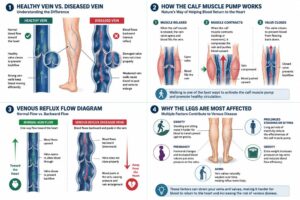
Your circulatory system includes arteries and veins. Arteries carry blood away from the heart, while veins return blood toward it.
Because blood in the legs must travel upward against gravity, the venous system relies on one-way valves and muscle movement to help maintain circulation.
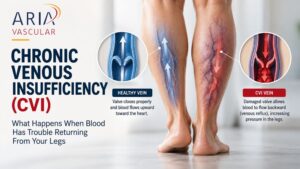
When you walk, your calf muscles contract and compress nearby veins, helping push blood upward. Healthy venous valves help prevent blood from flowing backward between muscle contractions.
If these valves weaken or become damaged, blood may flow backward through the affected veins. This is known as venous reflux.
In other cases, a blood clot or other obstruction may interfere with the normal movement of blood through the venous system.
Both reflux and obstruction can contribute to elevated venous pressure and symptoms in the legs.
What Conditions Can a Vein Specialist Evaluate?
Depending on their scope of practice, vascular specialists may evaluate several conditions affecting venous circulation, including:
- Varicose veins: Enlarged or twisted superficial veins that may cause discomfort or swelling.
- Chronic venous insufficiency: Long-term problems with venous blood return that can contribute to swelling and skin changes.
- Deep vein thrombosis (DVT): A blood clot within a deep vein, requiring prompt medical assessment.
- Superficial venous thrombosis: Clotting and inflammation in a superficial vein.
- Post-thrombotic syndrome: Chronic symptoms that may develop following a previous DVT.
- Venous leg ulcers: Wounds associated with advanced chronic venous disease.
The appropriate specialist depends on the symptoms, urgency, and suspected underlying condition.
9 Signs You Should Consider Seeing a Vein Specialist
Venous disease can produce several symptoms, and their severity varies considerably between individuals.
The following signs may indicate that further medical evaluation is appropriate.
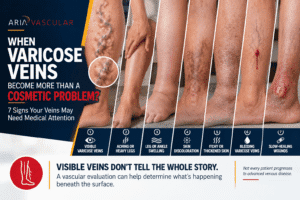
1. Persistent Leg or Ankle Swelling
Swelling in the lower legs and ankles is one of the symptoms commonly associated with chronic venous disease.
You might notice that your shoes feel tighter later in the day or that your socks leave noticeable indentations around your ankles.
When venous blood return is impaired, increased pressure within the veins can contribute to fluid accumulation in surrounding tissues.
Swelling related to chronic venous disease may worsen after prolonged standing and sometimes improve with leg elevation.
However, leg swelling can also be caused by heart or kidney conditions, medications, lymphedema, blood clots, and other health problems.
When to seek evaluation: Recurring or persistent swelling deserves medical attention, especially when accompanied by aching, heaviness, or changes in skin appearance. Sudden swelling, particularly in one leg, requires prompt medical assessment.
2. Heavy, Aching, or Tired Legs
Do your legs feel unusually heavy after standing or sitting for long periods?
Some patients with venous disease describe a dull, aching discomfort or a sensation of pressure in the calves and lower legs.
Symptoms may become more noticeable toward the end of the day, particularly after extended periods of standing.
In certain cases, walking or elevating the legs may provide temporary relief.
Although these symptoms can occur with venous insufficiency, they may also be associated with muscle fatigue, musculoskeletal conditions, or other medical problems.
When to seek evaluation: If leg heaviness or aching occurs regularly, worsens, or interferes with your activities, discuss it with a healthcare professional.
3. Visible, Bulging, or Twisted Leg Veins
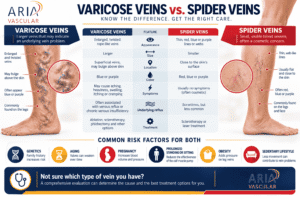
Varicose veins are enlarged superficial veins that may appear twisted, raised, or rope-like beneath the skin.
They are often visible along the calves or thighs and may become more noticeable after standing for extended periods.
Some people experience no discomfort from varicose veins. Others develop aching, swelling, heaviness, or itching.
Smaller spider veins generally appear as fine red, blue, or purple lines near the skin's surface.
The appearance of a vein alone does not determine the severity of underlying venous disease.
When to seek evaluation: Visible varicose veins accompanied by discomfort, swelling, skin changes, or recurrent inflammation should be assessed.
4. Recurring Leg Cramps or Restlessness
Some people with chronic venous disease report nighttime leg cramps, uncomfortable sensations, or restlessness in the legs.
These symptoms may occur alongside heaviness, aching, or swelling.
However, leg cramps are common and have many possible causes, including muscle overuse, medication effects, nerve disorders, and other conditions.
Restless legs syndrome is also a separate condition and should not automatically be attributed to venous disease.
When to seek evaluation: Recurrent cramps or nighttime discomfort deserve medical assessment, particularly when accompanied by other symptoms of poor venous circulation.
5. Skin Discoloration Around the Ankles
Changes in skin color, particularly around the ankles and lower legs, may indicate more advanced chronic venous disease.
Prolonged venous hypertension can contribute to inflammation and the accumulation of blood-breakdown pigments within the skin.
This may produce brown or reddish-brown areas, especially near the inner ankle.
Some individuals also develop redness, dryness, or skin irritation.
These changes are sometimes associated with stasis dermatitis, an inflammatory skin condition related to impaired venous circulation.
When to seek evaluation: Persistent discoloration or unexplained skin changes around the lower legs should be examined by a healthcare professional.
6. Persistent Itching, Burning, or Skin Irritation
Itching or burning sensations around the lower legs can sometimes be associated with chronic venous disease.
Elevated venous pressure may contribute to inflammation in the surrounding tissues, causing the skin to become dry, irritated, or sensitive.
Over time, affected areas may develop eczema-like changes or thickening.
It is important to recognize that many common dermatologic conditions can produce similar symptoms.
When to seek evaluation: Persistent skin irritation, particularly when combined with swelling or discoloration, should not be dismissed without appropriate assessment.
7. Slow-Healing Wounds Near the Ankles
A wound on the lower leg that does not heal normally may be a sign of an underlying circulation problem.
Venous leg ulcers commonly develop around the ankle, particularly near its inner surface.
Long-standing venous hypertension can affect the surrounding tissues and contribute to skin breakdown.
These wounds may be associated with swelling, discoloration, irritation, or fluid drainage.
Not all lower-leg wounds are venous ulcers. Arterial disease, diabetes, infection, and other conditions must also be considered.
When to seek evaluation: Any unexplained or nonhealing leg wound deserves timely medical attention. Do not wait for a wound to become large or severely painful.
8. Redness, Warmth, or Tenderness Along a Vein
A superficial vein that suddenly becomes red, warm, tender, or unusually firm may indicate superficial venous thrombosis.
This condition involves clot formation and inflammation within a superficial vein.
An affected vein may feel like a hard, painful cord beneath the skin.
Although superficial venous thrombosis differs from deep vein thrombosis, the conditions can sometimes coexist or involve nearby portions of the venous system.
When to seek evaluation: New vein tenderness, redness, or warmth should be assessed promptly. Do not wait for a routine vein consultation if a blood clot is suspected.
9. Leg Symptoms That Interfere With Daily Life
Sometimes the clearest indication that something deserves attention is the impact it has on everyday activities.
Perhaps your legs become uncomfortable while standing at work, or recurring swelling makes walking and exercising more difficult.
You may find yourself regularly elevating your legs after work or avoiding certain activities because of discomfort.
Persistent symptoms should not be ignored simply because they are not severe.
When to seek evaluation: If recurring leg symptoms interfere with your work, sleep, mobility, or quality of life, a medical assessment can help identify the cause and possible treatment options.
When Are Leg Symptoms an Emergency?
While many venous conditions develop gradually, certain circulation problems require immediate medical attention.
Symptoms That May Indicate Deep Vein Thrombosis
Deep vein thrombosis (DVT) occurs when a blood clot forms within a deep vein, most commonly in the leg.
Possible symptoms include:
- Sudden swelling in one leg.
- New calf or thigh pain.
- Unexplained tenderness.
- Warmth or redness in the affected area.
DVT can occur without obvious symptoms, and these signs can have other causes.
If you suspect DVT, seek prompt medical assessment rather than waiting for a routine appointment.
Warning Signs of Pulmonary Embolism
A pulmonary embolism can occur when a blood clot travels to the lungs.
Call 911 for sudden shortness of breath, chest pain, coughing blood, fainting, or collapse.
Other Urgent Circulation Problems
A suddenly cold, pale, severely painful, numb, or weak leg may indicate an acute arterial circulation problem and requires emergency medical attention.
Significant bleeding from a varicose vein also requires urgent care. Apply firm direct pressure, elevate the leg if possible, and seek emergency help if bleeding is substantial or does not stop.
Learn more from the Centers for Disease Control and Prevention .
Can You Have Venous Disease Without Visible Varicose Veins?
Yes. Although varicose veins are among the most recognizable signs of venous disease, they are not present in every case.
Some circulation problems involve deeper veins that cannot be seen through the skin.
For example, a previous deep vein thrombosis may damage venous valves or leave residual obstruction.
This can contribute to post-thrombotic syndrome, which may cause persistent swelling, discomfort, heaviness, and skin changes.
Other patients may experience superficial venous reflux without prominent, visibly enlarged veins.
Because leg symptoms can arise from many conditions, a vascular evaluation may be needed to identify whether the venous system is involved.
For a more detailed explanation, read our article about chronic venous insufficiency .
What Causes Poor Venous Circulation in the Legs?
Venous circulation problems can develop for several reasons. Understanding the underlying mechanism is important because different conditions may require different approaches to care.
Damaged or Weakened Vein Valves
Healthy venous valves help prevent blood from flowing backward as it travels toward the heart.
When these valves become incompetent, blood may flow in the wrong direction, increasing pressure within affected veins.
This condition, known as venous reflux, is a common contributor to superficial venous disease.
Previous Deep Vein Thrombosis
A previous blood clot can damage valves or interfere with normal blood flow through deeper veins.
Some individuals develop persistent symptoms after a DVT, including swelling, heaviness, discomfort, or skin changes.
Common Risk Factors
Several factors may increase the likelihood of developing certain venous disorders.
- Family history of varicose veins or venous disease.
- Increasing age.
- Pregnancy and hormonal changes.
- Obesity.
- Prolonged standing or sitting.
- Previous venous thrombosis.
- Reduced mobility or extended periods of immobility.
Risk factors do not establish a diagnosis. Many people with these characteristics never develop clinically significant venous disease.
How Does a Vein Specialist Evaluate Leg Symptoms?
A vascular evaluation is designed to identify the likely cause of symptoms and determine whether additional testing or treatment is needed.
Medical History and Symptom Review
Your clinician may ask when symptoms began, whether they affect one or both legs, and what makes them better or worse.
They may also review previous blood clots, surgeries, medications, family history, and other health conditions.
Physical Examination
The examination may include checking for visible veins, swelling, skin discoloration, wounds, and tenderness.
The clinician may also assess pulses and other findings that help distinguish venous problems from arterial or nonvascular conditions.
Venous Duplex Ultrasound
Duplex ultrasound is a commonly used noninvasive test for evaluating venous circulation.
It combines ultrasound imaging with Doppler techniques to assess blood flow.
Depending on the clinical question, the examination can help identify venous reflux, obstruction, or blood clots.
For chronic superficial venous disease, professional guidelines identify duplex ultrasound as the diagnostic test of choice for evaluating venous reflux.
The test generally does not require injections or incisions. The ultrasound probe is moved over the skin using a conductive gel.
Some pressure from the probe may be uncomfortable over tender areas.
Additional Testing When Necessary
Not every patient requires the same tests.
If symptoms suggest an arterial circulation problem, a clinician may recommend an ankle-brachial index or arterial ultrasound.
More advanced vascular imaging may be appropriate in selected cases, particularly when deeper venous obstruction is suspected.
The goal is to select tests based on clinical findings rather than assuming that every leg symptom is venous in origin.
What Happens if a Venous Circulation Problem Is Found?
Treatment depends on the underlying condition, the severity of symptoms, ultrasound findings, medical history, and patient preferences.
Not everyone with venous disease requires a procedure.
Lifestyle and Conservative Management
For certain patients, conservative measures can help manage symptoms.
- Walking and regular calf muscle movement.
- Avoiding prolonged immobility when possible.
- Elevating the legs when appropriate.
- Weight management when medically indicated.
- Graduated compression stockings when recommended.
Compression is not appropriate for every patient. Individuals with suspected significant arterial disease or other complicating conditions should obtain medical guidance before using compression therapy.
Minimally Invasive Venous Treatments
Some patients with symptomatic superficial venous reflux may benefit from minimally invasive treatments.
Depending on the anatomy and clinical circumstances, options may include endovenous laser ablation, radiofrequency ablation, foam sclerotherapy, or other techniques.
These treatments are designed to close or manage selected abnormal superficial veins.
They are not interchangeable treatments for every vascular condition. For example, DVT and deep venous obstruction require different clinical considerations.
Professional guidelines recommend superficial venous intervention over long-term compression alone for appropriately selected patients with symptomatic axial reflux who are candidates for intervention.
Treatment availability varies by practice, and your clinician can explain which approaches may be appropriate for you.
Individualized Treatment Planning
An effective care plan begins with understanding the cause of symptoms.
Some patients benefit from symptom management and monitoring. Others may require intervention or additional specialist evaluation.
The decision should consider clinical findings, expected benefits, potential risks, and the patient's treatment goals.
Why Early Evaluation of Persistent Leg Symptoms Matters
Persistent leg symptoms can be frustrating, especially when the underlying cause is unclear.
Many people attempt to manage swelling, heaviness, or discomfort for months before discussing it with a healthcare professional.
Although not every symptom indicates a serious condition, timely evaluation can help identify problems that may benefit from treatment.
For patients with chronic venous disease, appropriate assessment may help explain recurring symptoms, identify venous reflux or obstruction, and guide care.
Early assessment is especially important when skin changes, recurrent inflammation, or wounds develop.
It is also important to avoid assuming that every circulation problem will progress. Many patients have mild or stable disease.
The value of evaluation lies in obtaining an accurate diagnosis and making informed decisions about care.
Seeking a Vascular Evaluation in Stockton, California
If you live in Stockton or the surrounding San Joaquin County area, persistent leg symptoms may be a reason to discuss vascular evaluation with a healthcare professional.
ARIA Vascular Center focuses on helping patients better understand vascular conditions and available care options.
Whether you are concerned about recurring leg swelling, discomfort, visible vein changes, or other symptoms, identifying the underlying cause is an important first step.
Depending on your symptoms, medical history, and examination findings, your clinician can help determine whether a vascular consultation or additional testing is appropriate.
Patients in Stockton and surrounding Central Valley communities can contact ARIA Vascular Center to learn more about available vascular care services.
Frequently Asked Questions About Seeing a Vein Specialist
What symptoms indicate I should see a vein specialist?
Persistent leg swelling, heaviness, aching, symptomatic varicose veins, skin discoloration, and nonhealing wounds may warrant vascular evaluation. Sudden or severe symptoms require more urgent assessment.
Should I see a vein specialist for swollen legs?
Persistent or recurring leg swelling deserves medical evaluation. Venous disease is one possible cause, but heart, kidney, lymphatic, medication-related, and other conditions must also be considered. Sudden one-sided swelling requires prompt assessment.
Can you have poor vein circulation without varicose veins?
Yes. Some venous problems involve deeper veins or produce symptoms without obvious enlarged superficial veins. Duplex ultrasound may help assess venous blood flow when clinically indicated.
What is the difference between a vein specialist and a vascular surgeon?
Vein specialist is a broad description of a clinician who evaluates or treats venous conditions. Vascular surgeons are physicians trained in surgical and nonsurgical management of vascular disease. Interventional radiologists and vascular medicine specialists may also provide venous care.
Can leg pain be caused by poor circulation?
Yes. Both venous and arterial circulation problems can contribute to leg discomfort, although their symptoms and treatments differ. Muscle, nerve, and joint conditions are also common causes of leg pain. An examination can help identify the likely cause.
How does a vein specialist check circulation in your legs?
Evaluation usually begins with a medical history and physical examination. Venous duplex ultrasound may be used to assess blood flow, reflux, or blood clots. Additional testing depends on the symptoms and clinical findings.
Is a venous ultrasound painful?
Venous duplex ultrasound is generally noninvasive and well tolerated. A clinician moves an ultrasound probe over the skin using gel. Mild discomfort may occur when pressure is applied over a tender area.
When is leg swelling considered serious?
Sudden swelling, particularly in one leg, may indicate a blood clot and requires prompt medical assessment. Swelling accompanied by chest pain, shortness of breath, or fainting requires emergency care. Persistent swelling should also be evaluated.
Do I need a referral to see a vein specialist?
Referral requirements depend on your insurance plan and the specialist's scheduling policies. Some plans allow direct specialist appointments, while others require a referral from a primary care provider. Check with your insurer and the practice.
Can venous disease be treated without surgery?
Many venous conditions can be managed with conservative measures or minimally invasive procedures. Treatment depends on the diagnosis, severity, anatomy, and patient preferences. Some conditions require medications or other specialized care.
Don't Ignore Persistent Changes in Your Leg Health
Leg discomfort, swelling, heaviness, and changes in skin appearance are easy to dismiss as everyday fatigue.
But when symptoms become persistent, worsen over time, or interfere with daily activities, they deserve attention.
Venous disease is only one possible explanation for these symptoms. A medical evaluation can help determine whether a circulation problem is involved and what steps may be appropriate.
Remember that you do not need to have visible varicose veins to experience a venous disorder.
Recognizing warning signs and seeking appropriate care can help you make informed decisions about your vascular health.
Concerned About Leg Pain, Swelling, or Vein Problems?
ARIA Vascular Center serves patients in Stockton and surrounding Central Valley communities. Learn more about vascular evaluations and available treatment options.
Contact ARIA Vascular CenterMedical References
- National Institute for Health and Care Excellence. Varicose Veins: Diagnosis and Management. Clinical Guideline CG168. Read guideline .
- NICE. Quality Statement 1: Referral to a Vascular Service. Read referral guidance .
- Centers for Disease Control and Prevention. Blood Clots During Travel: Recognize and Treat Blood Clots. Read CDC information .
- Society for Vascular Surgery, American Venous Forum, and American Vein and Lymphatic Society. Clinical Practice Guidelines, Part I: Duplex Scanning and Superficial Truncal Reflux. Read publication .
- Society for Vascular Surgery, American Venous Forum, and American Vein and Lymphatic Society. Clinical Practice Guidelines, Part II: Management of Varicose Veins. Read publication .